Religious Education
"Education is not about knowing things or taking lessons but about being able to use three lingos: those of the head, the heart, and the hands... learning so that you can think about what you feel and do, can feel what you think and do, and can do what you feel and think. Unity within a person." – Pope Francis
At Holy Rosary Catholic Primary School we are beginning our journey to follow the new Religious Education Directory and its program "To Know You More Clearly".
Throughout 2023-25 this will be rolled out across EYFS, KS1 and KS2. It is an innovative and enriching new Religious Education program that seeks to deepen the spiritual journey of students by fostering a profound understanding of Catholic teachings and values.
This program goes beyond the traditional curriculum, encouraging students to explore their faith through a lens of curiosity and introspection. Through engaging lessons, thoughtful reflections, and interactive activities, "To Know You More Clearly" creates a dynamic learning environment that encourages students to connect with their spirituality on a personal level.
This program not only imparts knowledge but also cultivates a genuine and enduring relationship with God, contributing to the overall spiritual development of the students.
Scripture is the foundation of each Branch and will develop knowledge, understanding, skills, compassion and awe and wonder across the curriculum.
The Ways of Knowing:
The ways of knowing describe the skills that pupils develop as they progress though the religious education curriculum. These are:

Understand:
In this way of knowing the aim is to help pupils understand deeply the meaning of sacred texts, religious beliefs, sacred rites, and the lives of individuals and communities who are shaped by these texts, beliefs and rites.

Discern:
In this was of knowing the aim is to help pupils ne able to judge wisely in response to different interpretations of the meaning, significance and implications of texts, beliefs, rites, and ways of life so that they can arrive at justified conclusions about what is true, what is good and what is beautiful.

Respond:
In this way of knowing the aim is to help pupils reflect personally and with integrity on what they have learnt and consider the implications for action these may have their own lives and the world in which they live.
Knowledge Lenses:
The knowledge lenses indicate what should be known by the end if each age phase. They are referred to as lenses since they are what we are looking at. These are:

Hear:
The first knowledge lens is called ‘Hear’ and discusses the human capacity for God, Divine Revelation, and its transmission, Sacred Scripture, and the human response to God’s invitation. It is called ‘hear’ because it focuses on the Word of God which we hear.
Believe:
The second knowledge lens is called ‘Believe’ and deals with the contents of the Creed. It is called ‘believe’ because it focuses on the content of the Church’s own profession of faith. In this lens we look at those doctrines that constitute our faith: trinity, incarnation, the Holy Spirit, the communion of saints, the role of the Blessed Virgin Mary.

Celebrate:
The third knowledge lens is called ‘Celebrate’ and is an exemplification of the Catechism that deals with liturgy and prayer. It is called ‘celebrate’ because it deals with the liturgy in which the Church celebrates the Paschal mystery of Christ. In this lens we look at prayer, liturgy, and sacrament, sacraments of initiation, the Eucharist, sacraments of healing, sacraments at the service of communion, and other liturgies and sacramentals.

Live:
The fourth knowledge lens is called ‘Live’ and is an exemplification of Catholic social teaching and deals with the ways in which the disciples of Christ are called to be in the world. It is called ‘live’ because it focuses on the impact of faith on how Christians live. In this lens we look at the dignity of the human person; freedom, conscience, and virtue; law, grace, and sin.

Dialogue:
The fifth knowledge lens is called ‘Dialogue’ and is an exemplification of the Church’s teaching on the relationship between Catholicism and other Christian traditions along with Catholicism and other religions and worldviews. It is called ‘Dialogue’ as this is the only authentic way of living faithfully in a world that accepts difference.
Encounter:
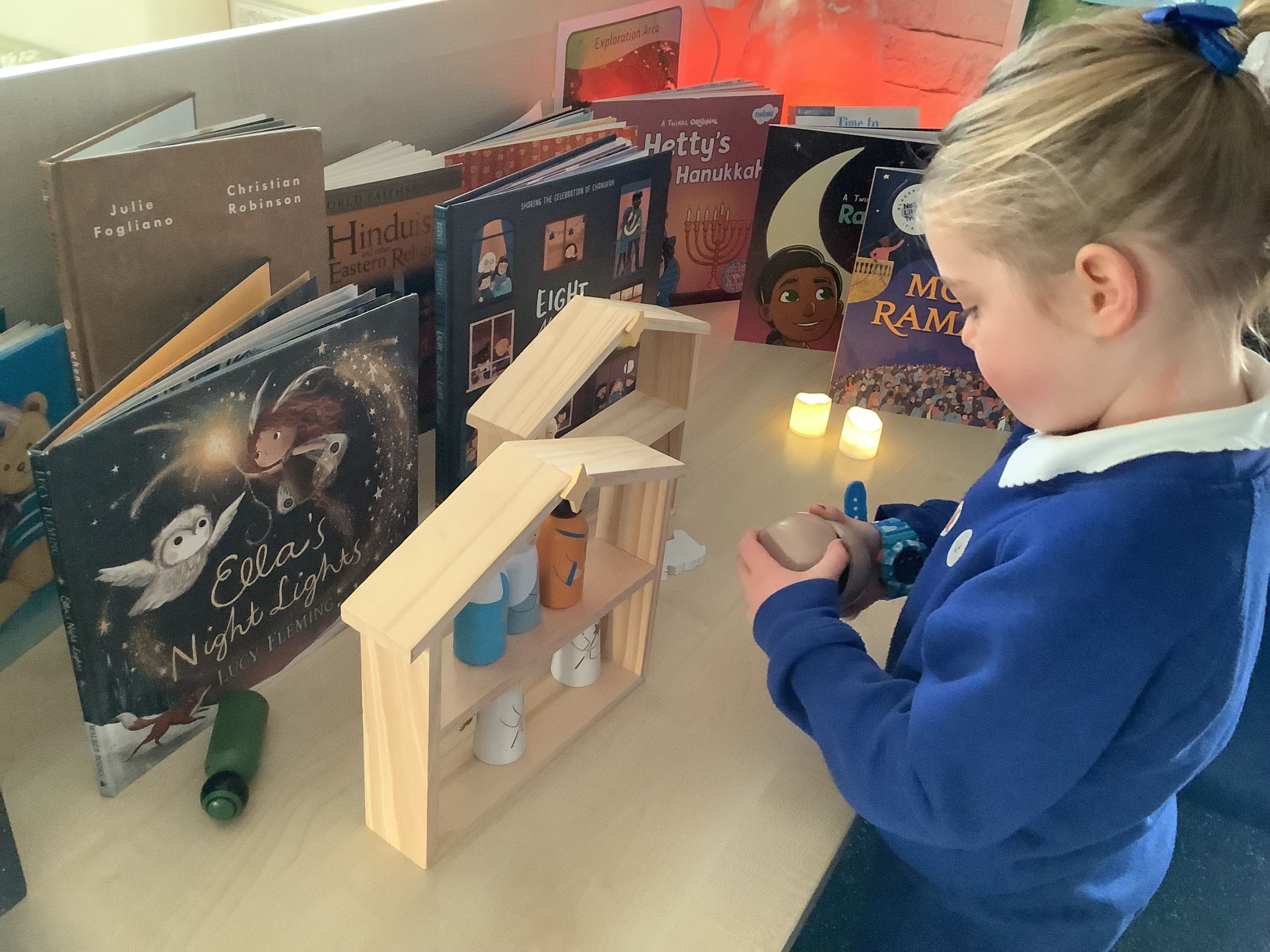
The sixth knowledge lens is called ‘Encounter’ and is when children engage in a discrete study of other faiths, religions and world views. It focus is on the importance of loving our neighbours and respecting other cultures and learning how to live peacefully with difference.
Religious Education at Holy Rosary
Nursery
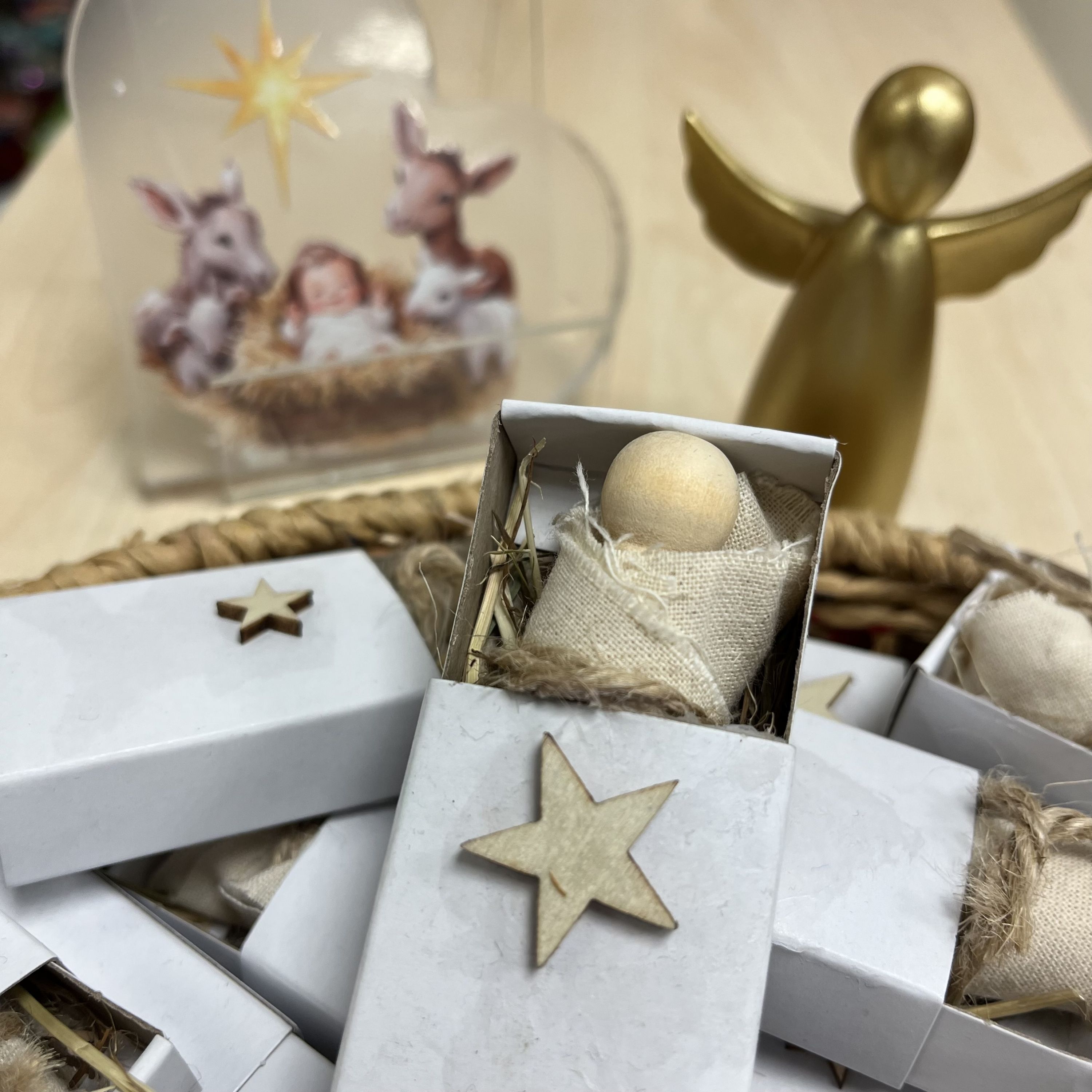
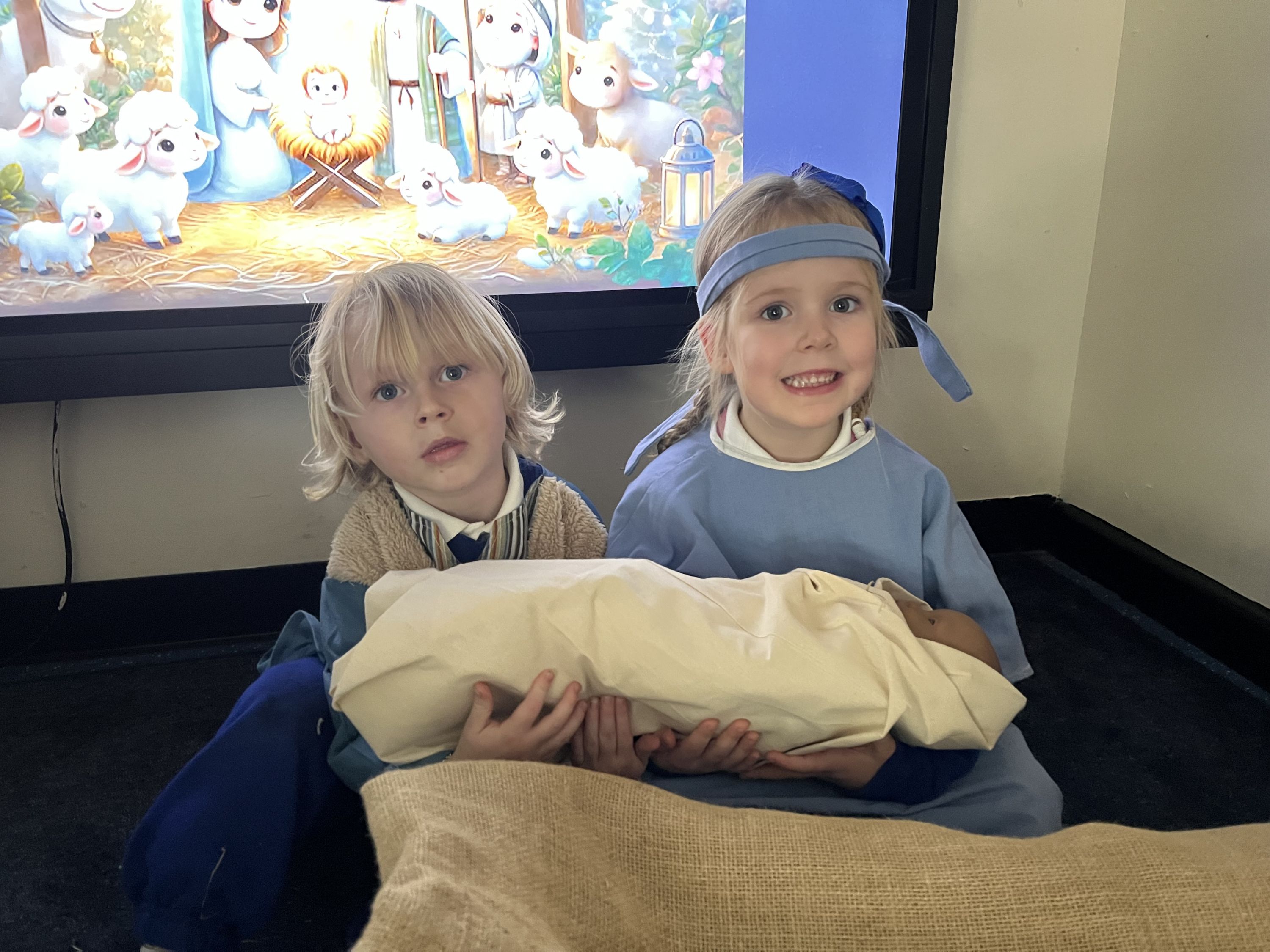
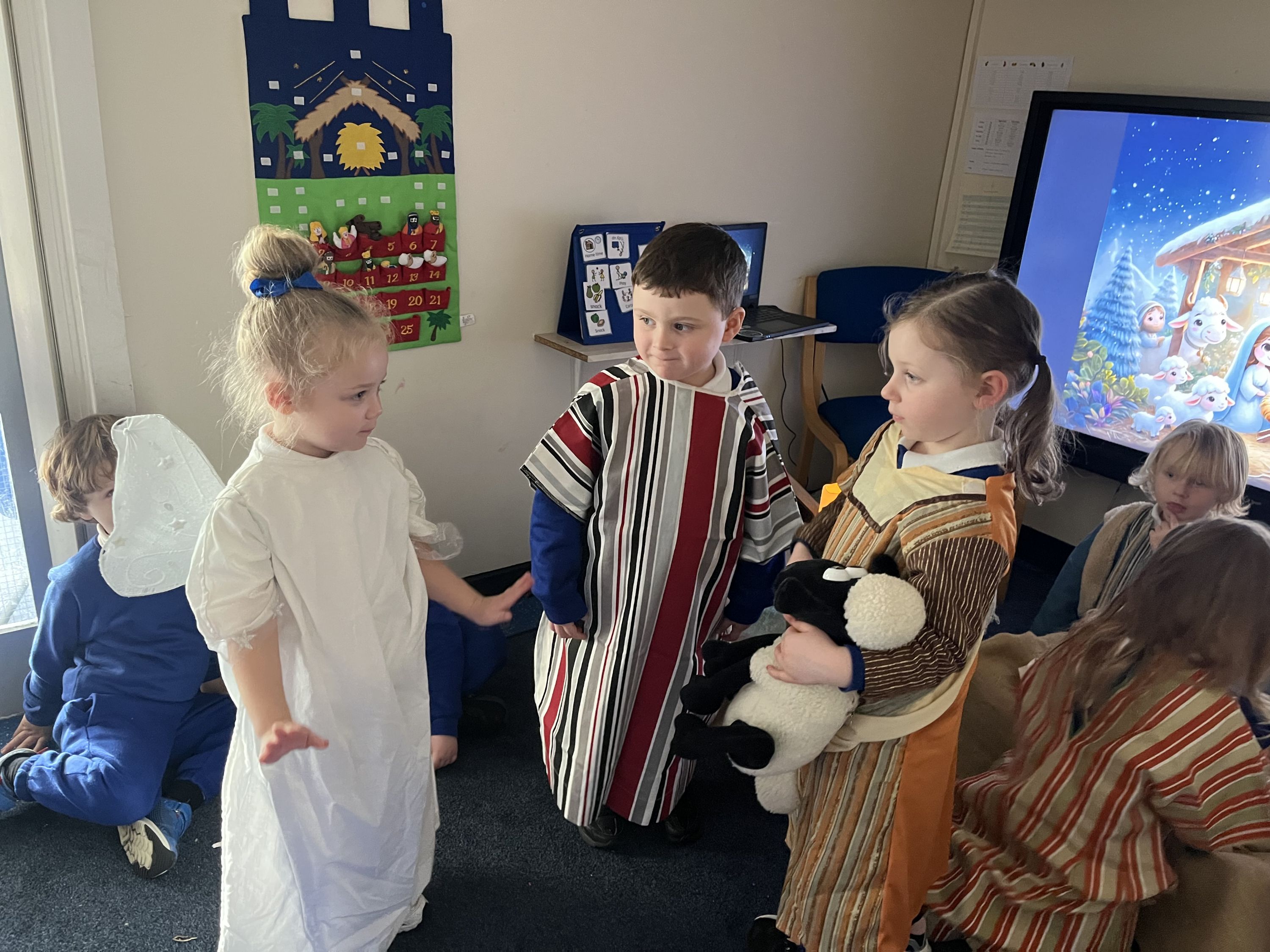
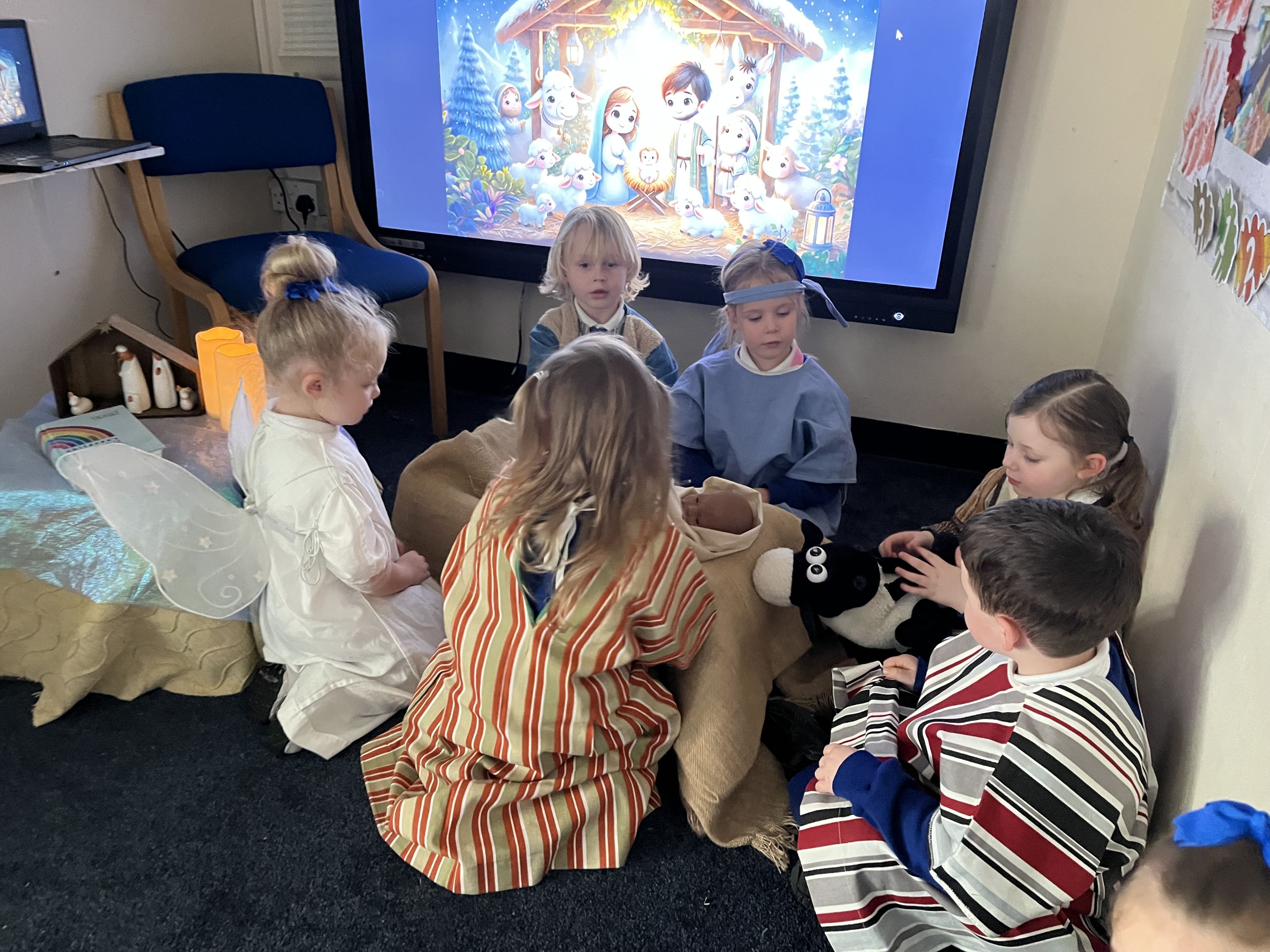
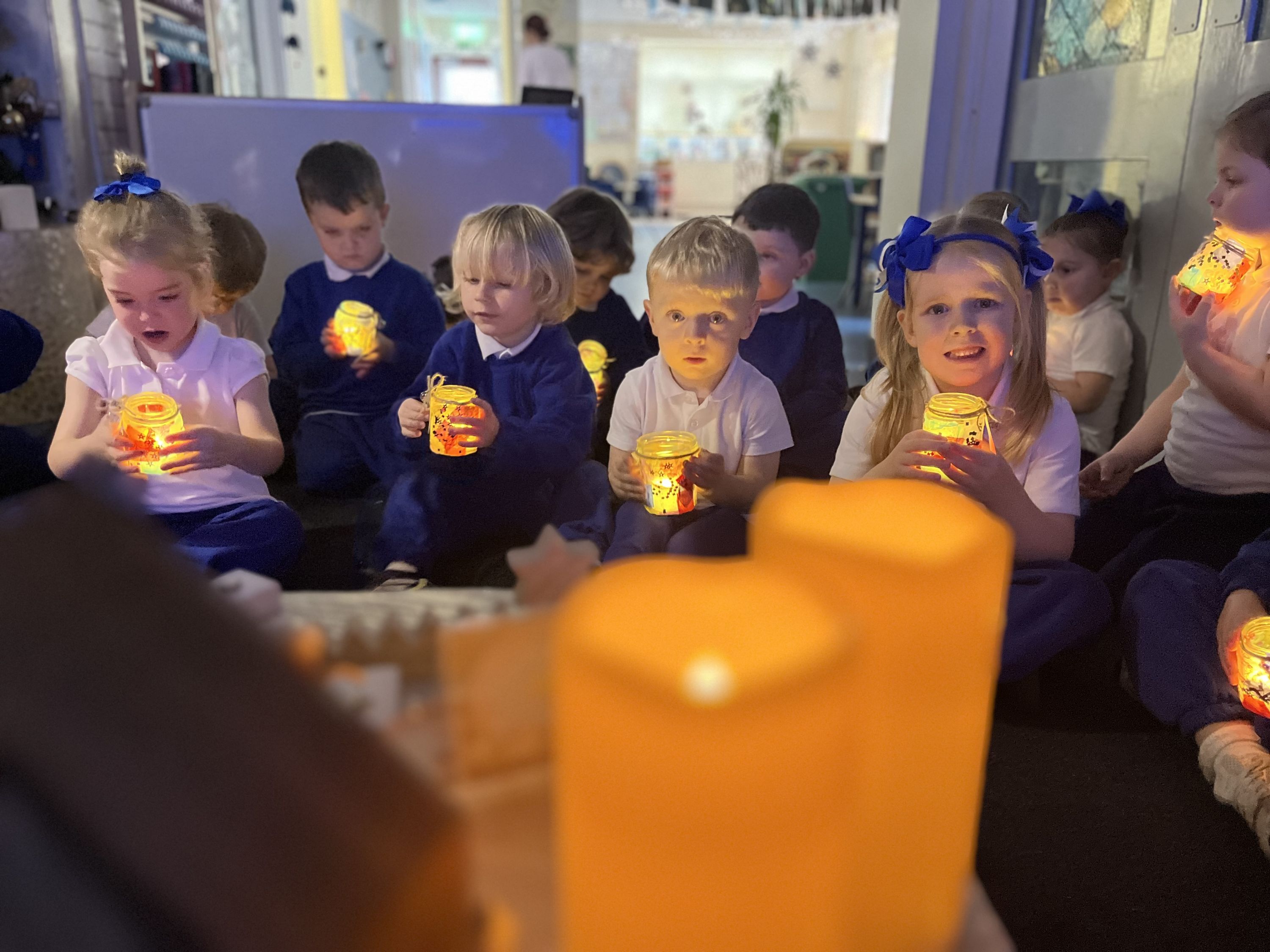
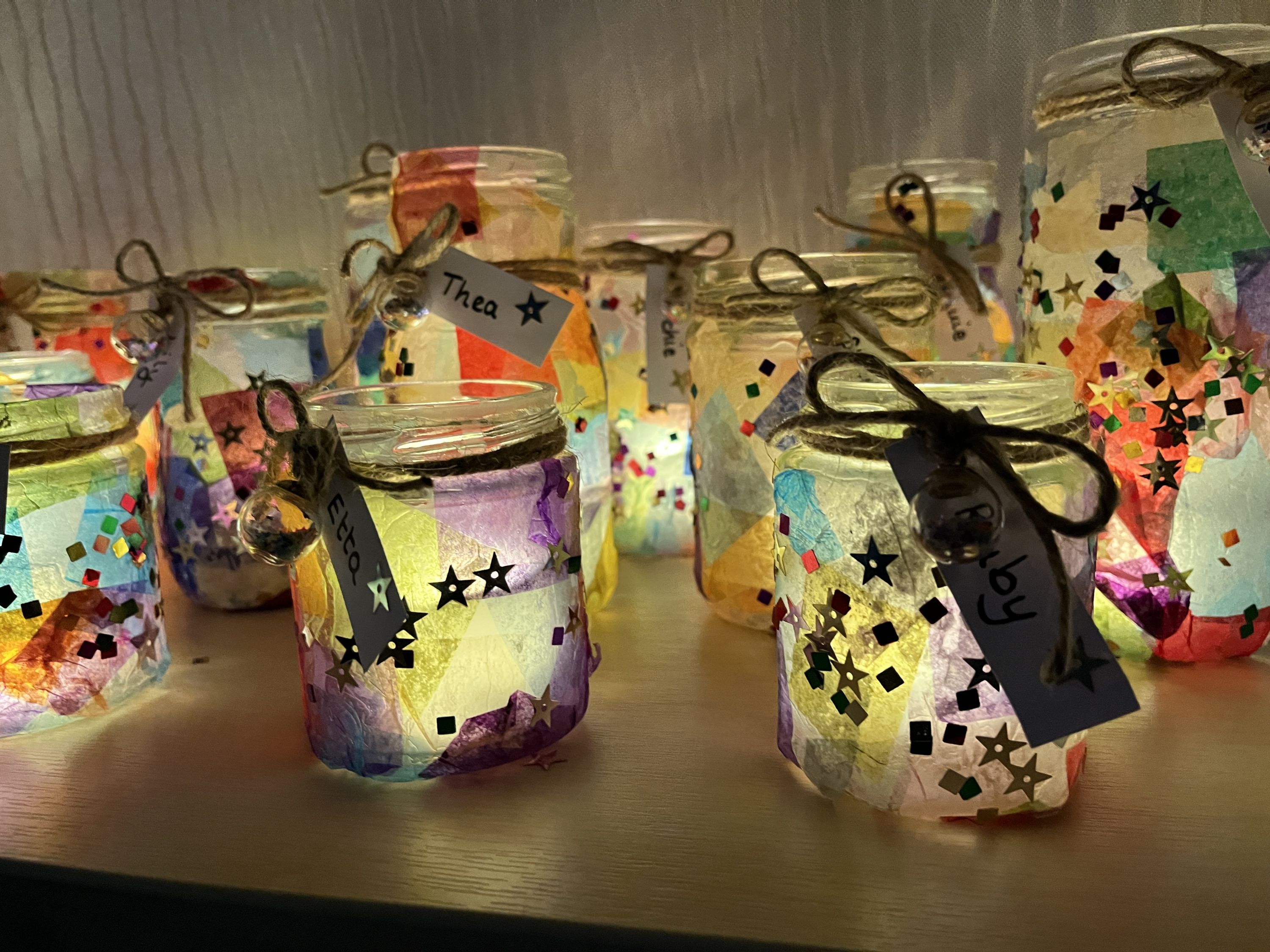
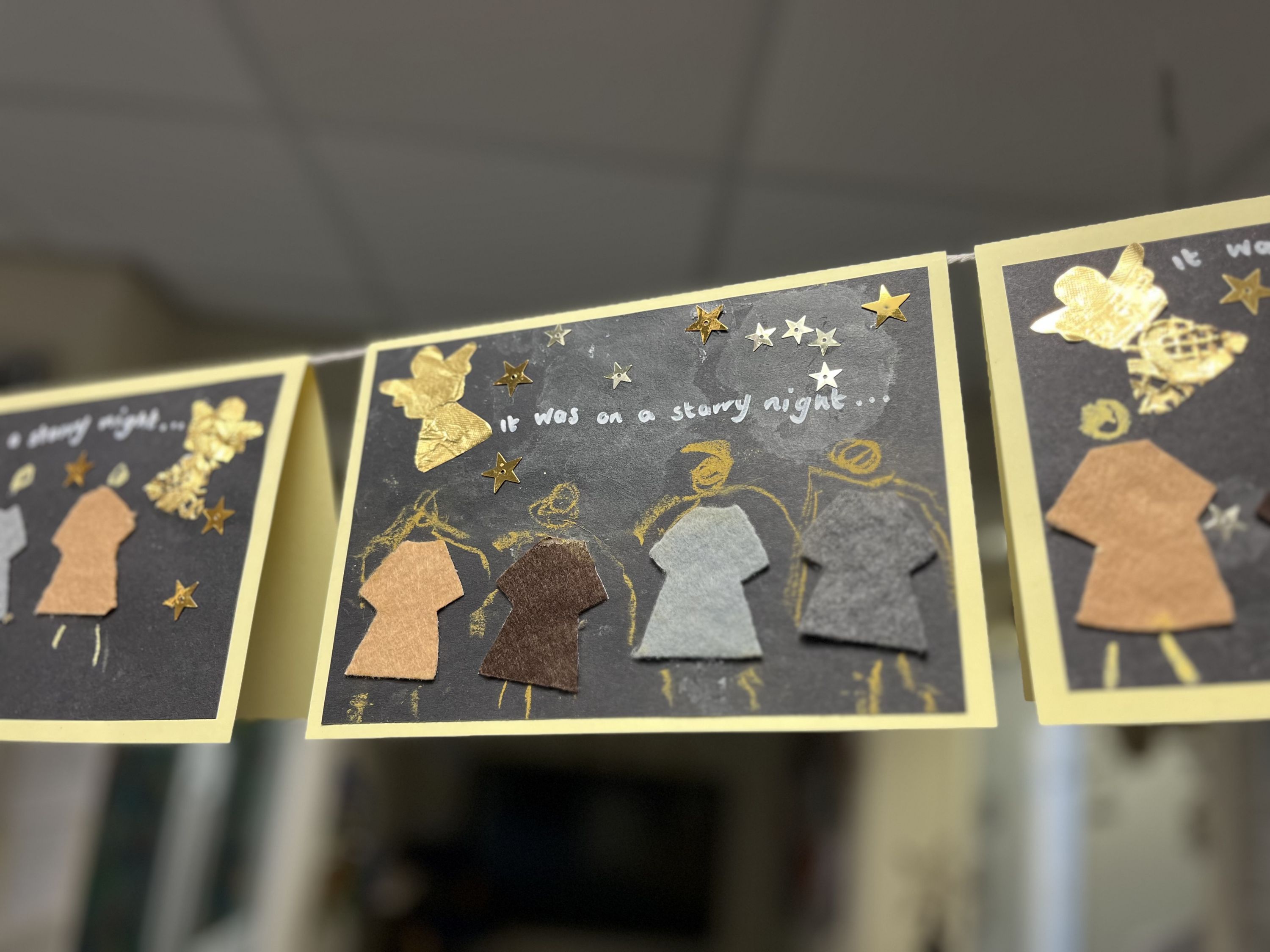
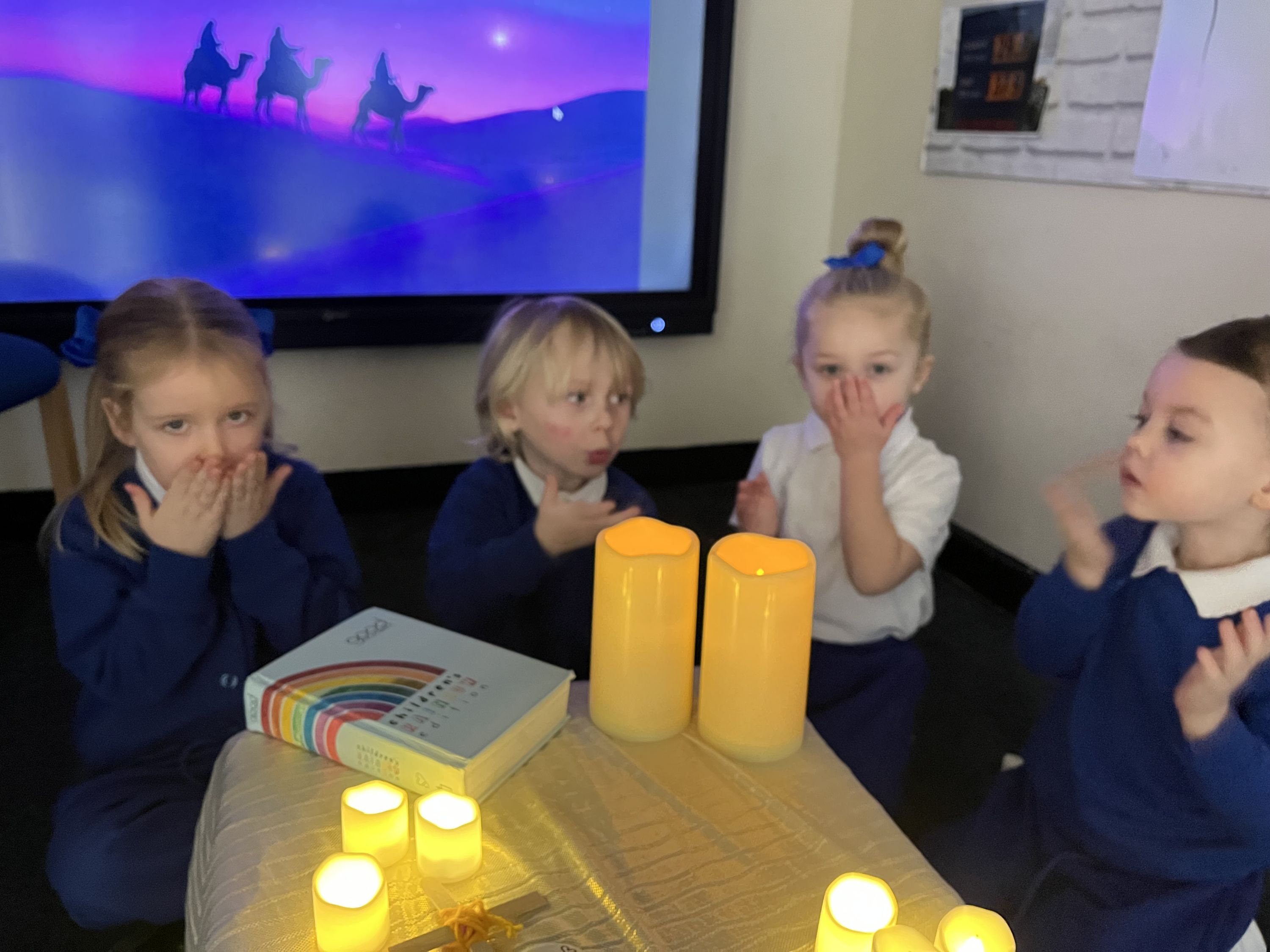
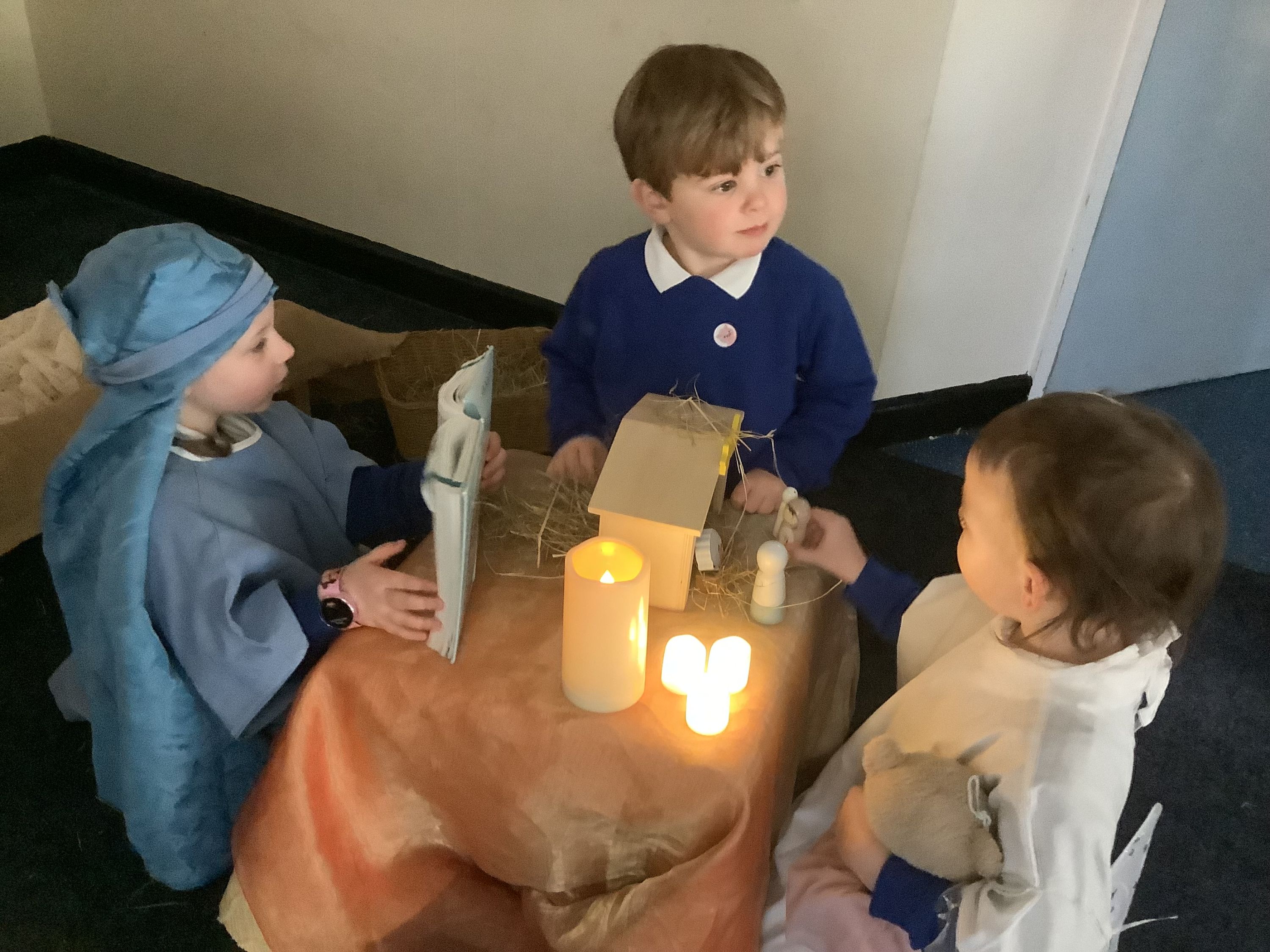
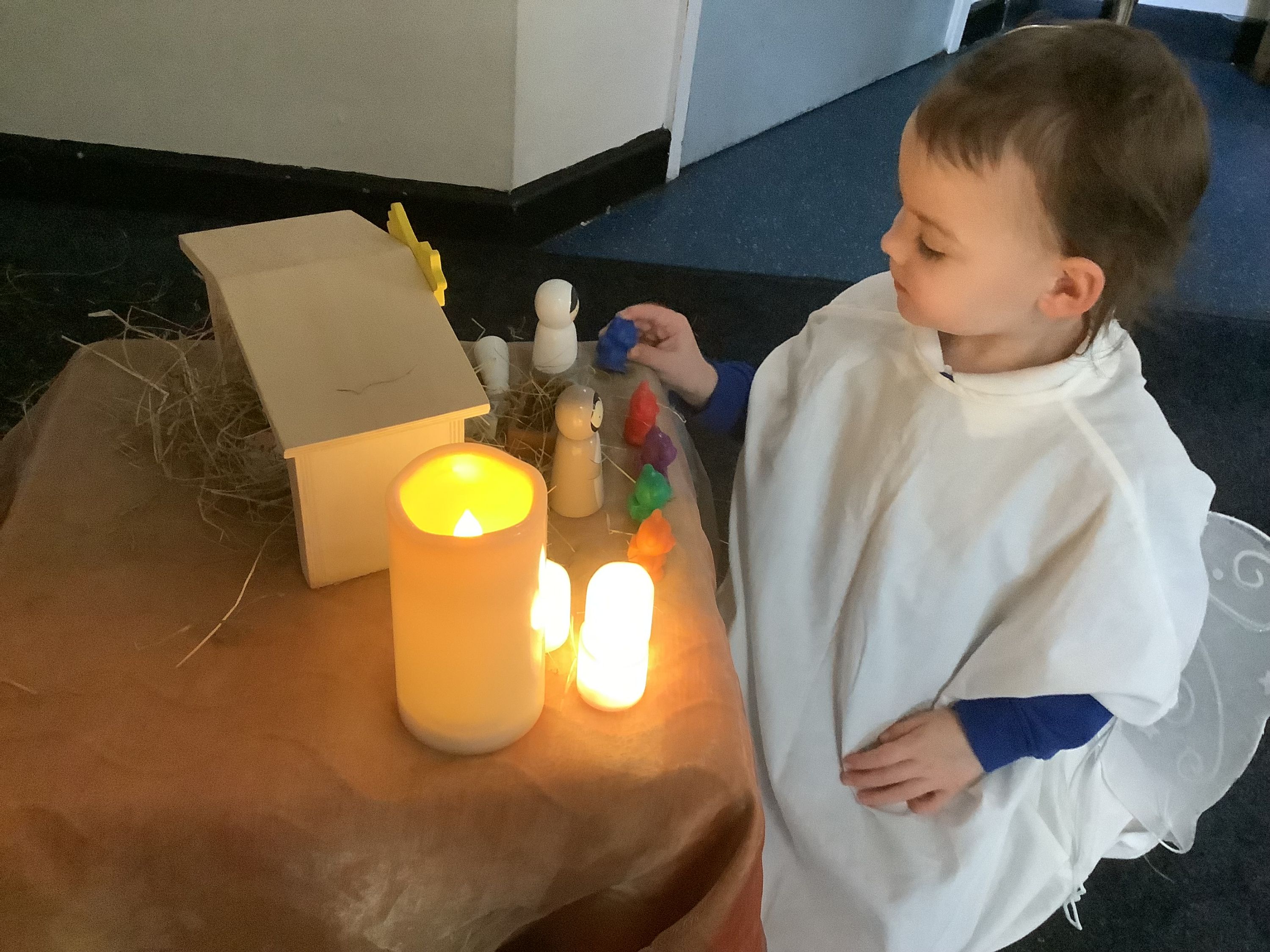
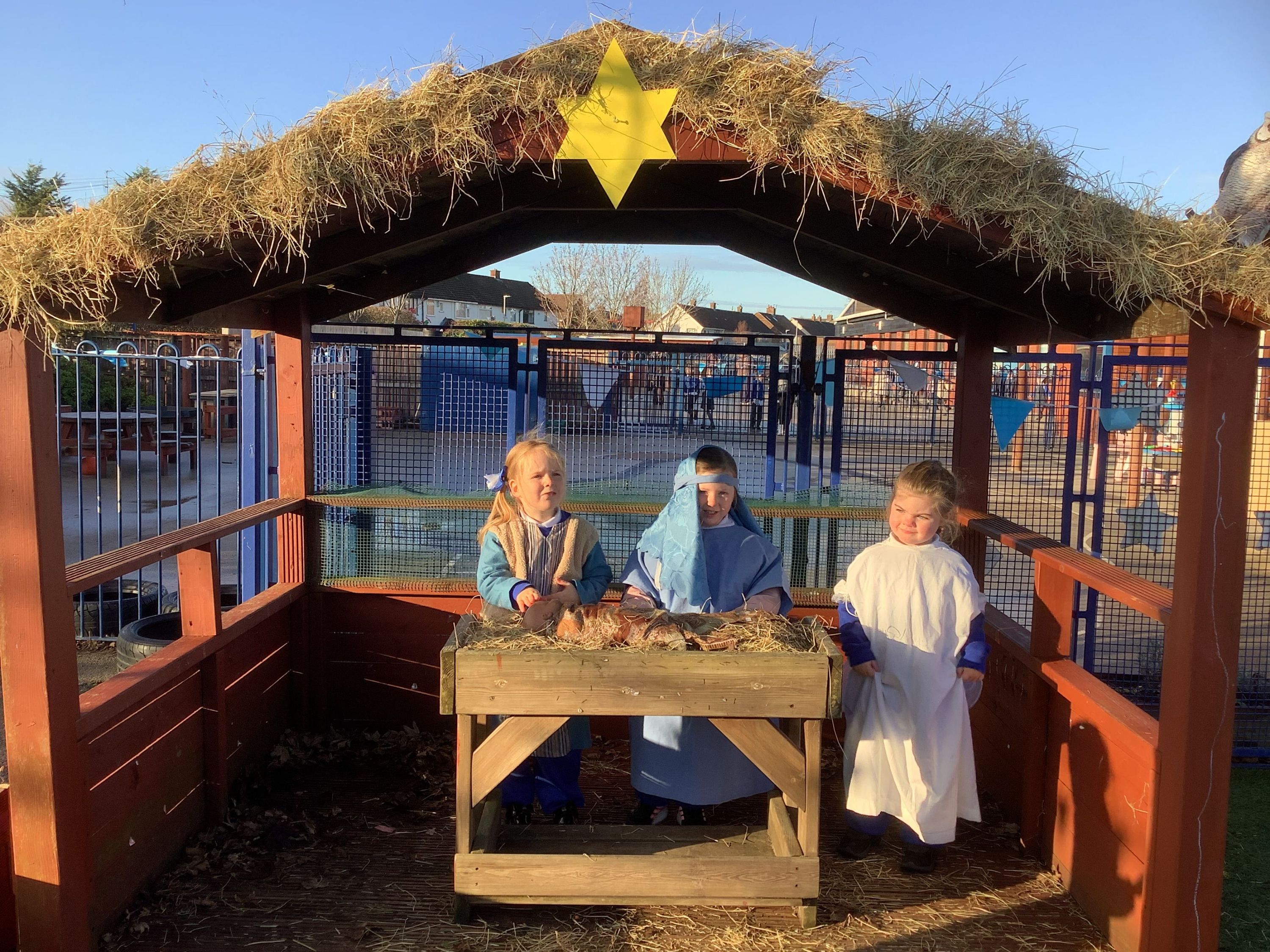
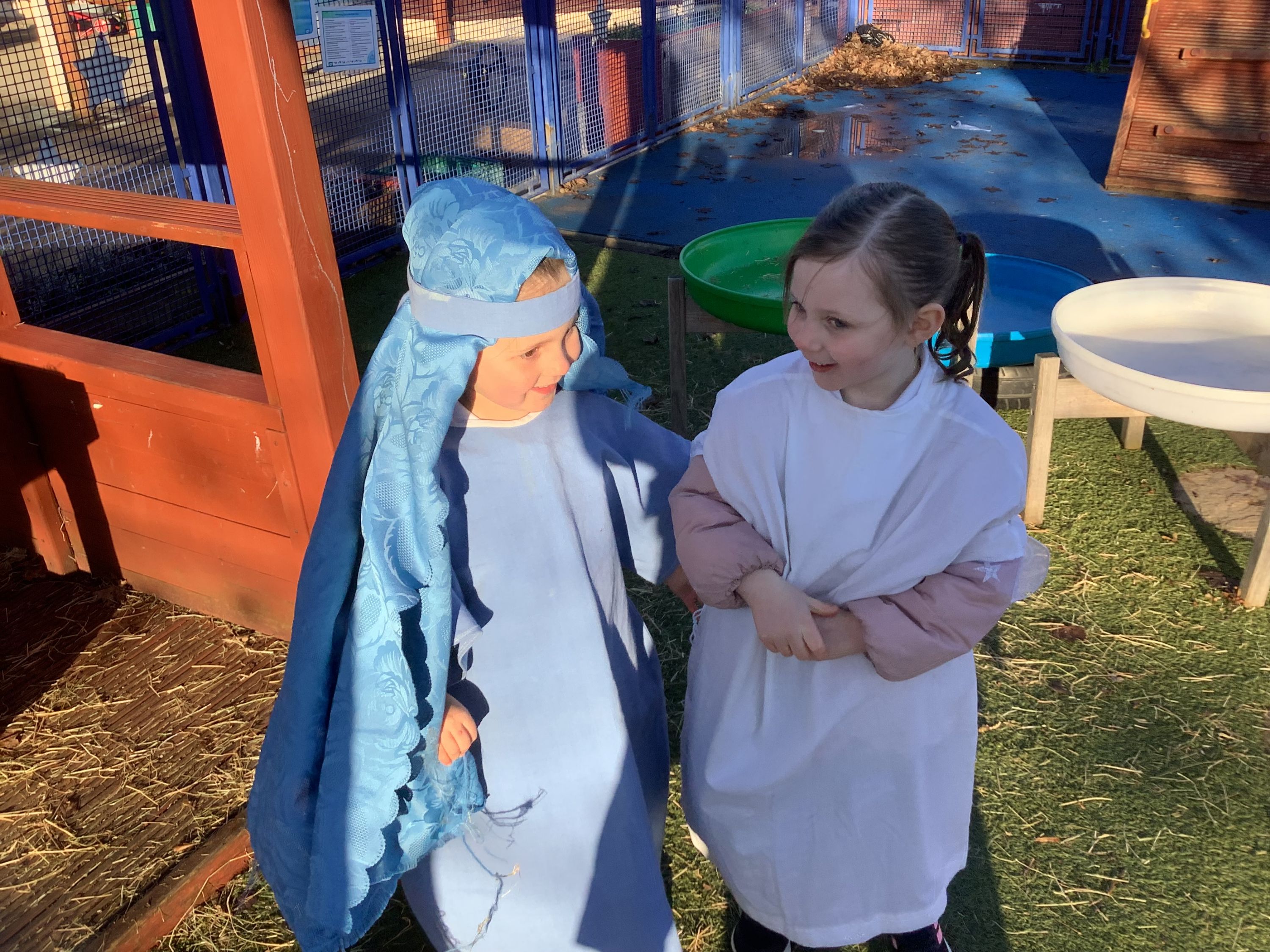
The nursery children prepared for the coming of baby Jesus. We made tiny mangers from matchboxes and peg dolls for the baby. We sequenced the nativity story both indoors and outdoors. We held a celebration with our parents and gifted beautiful glass lanterns that we had made.
Reception
Year 1
🌿 RE in Year 1 – Branch 1: Know You More Clearly
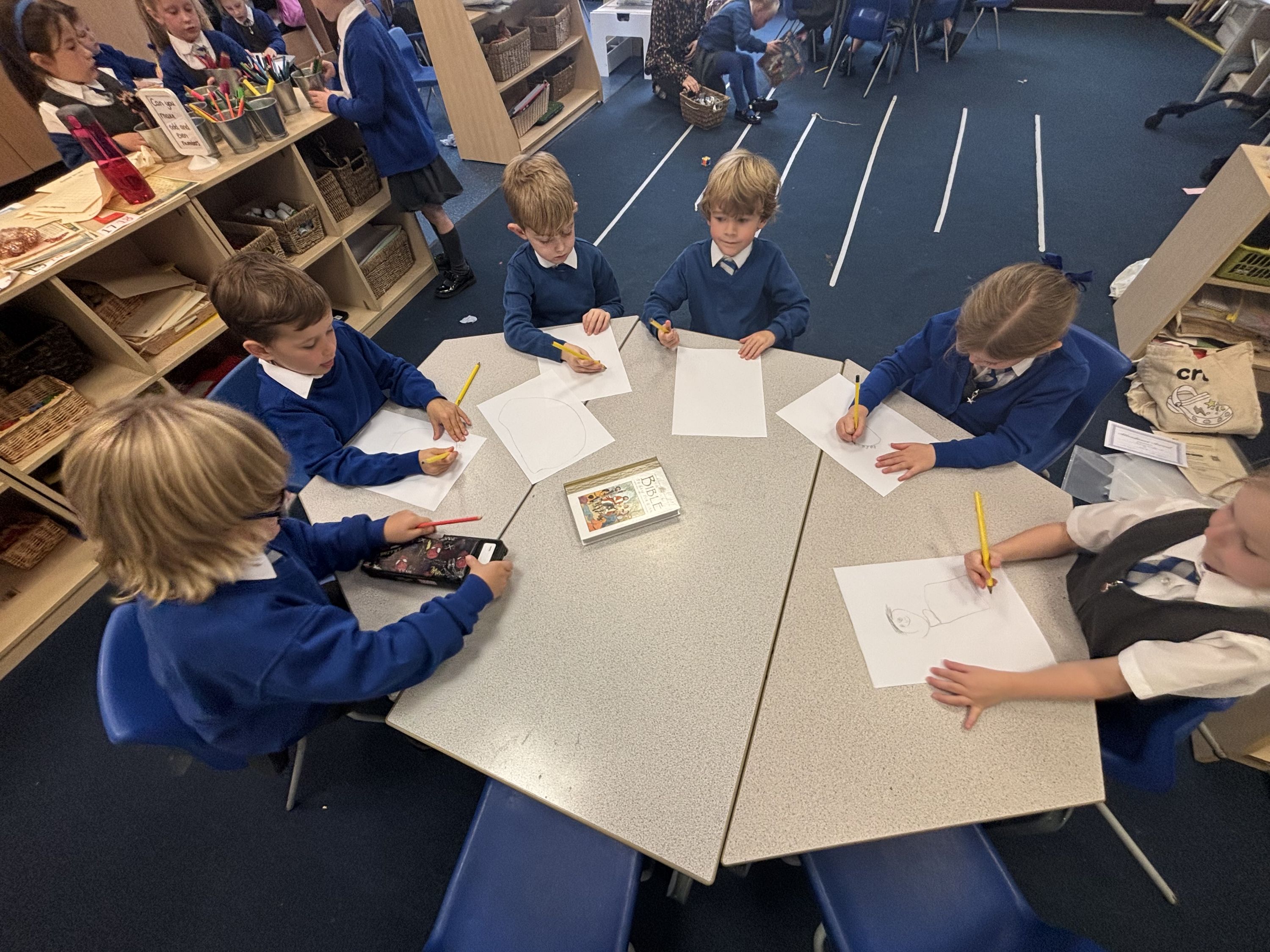
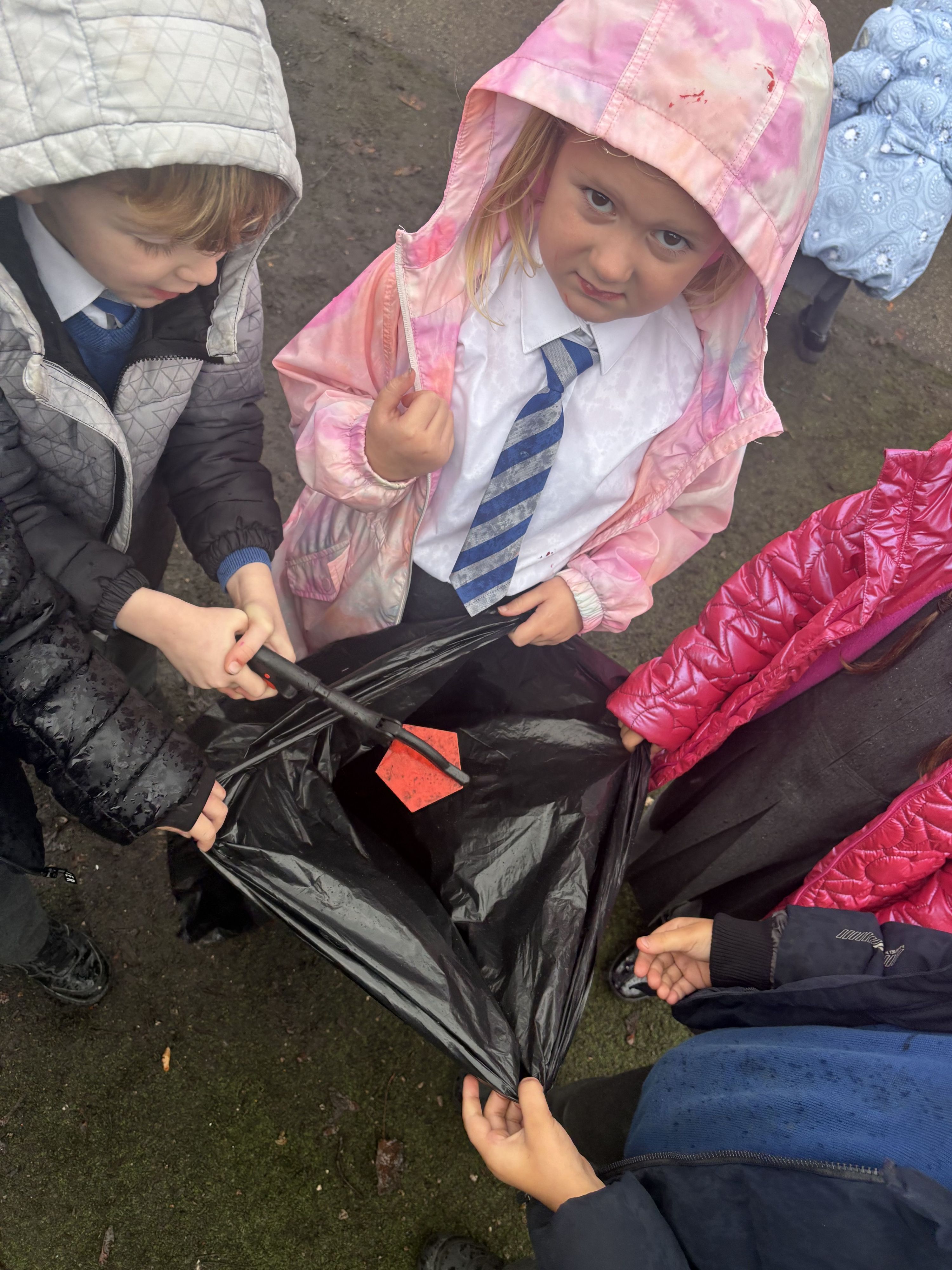
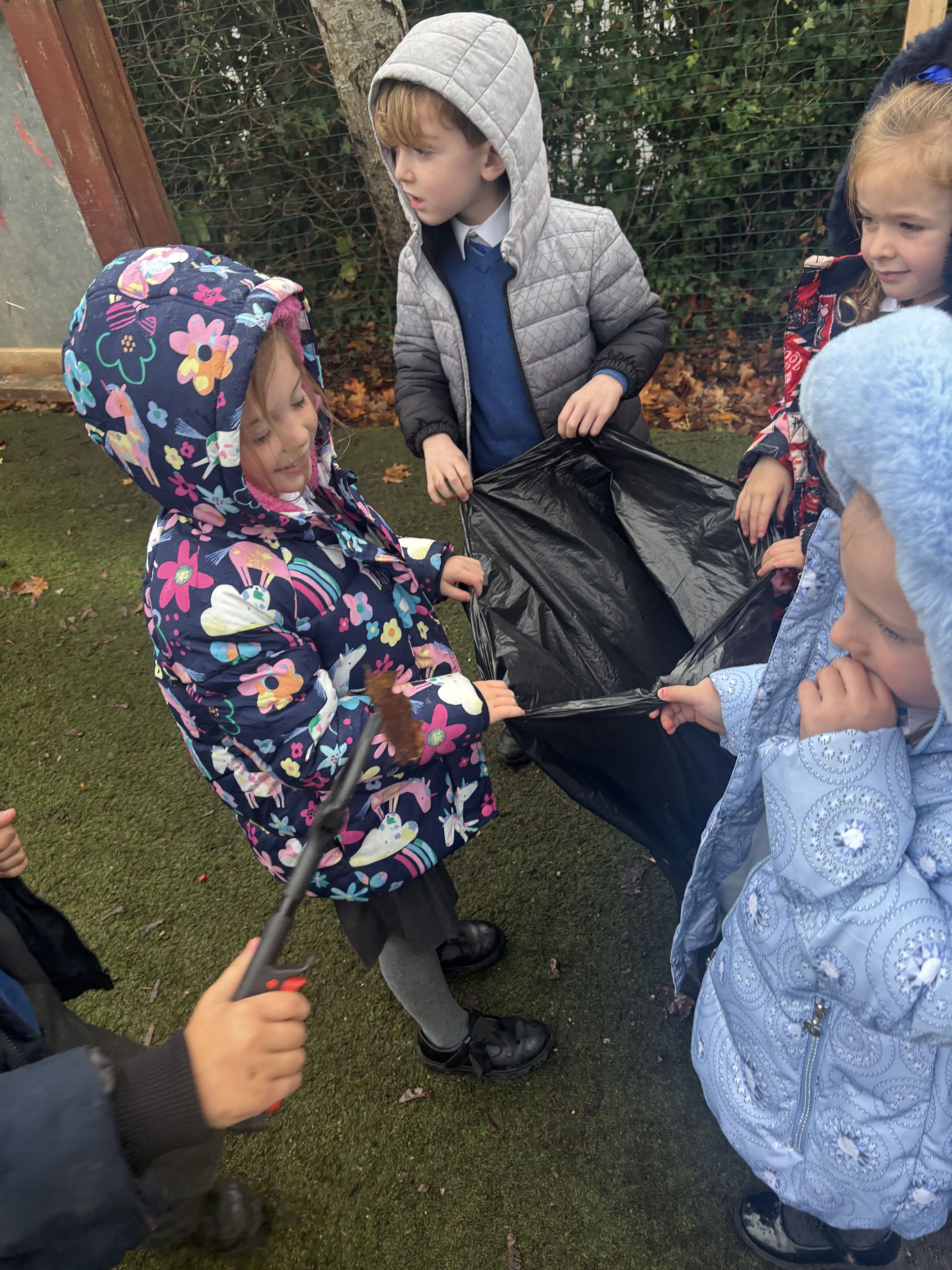
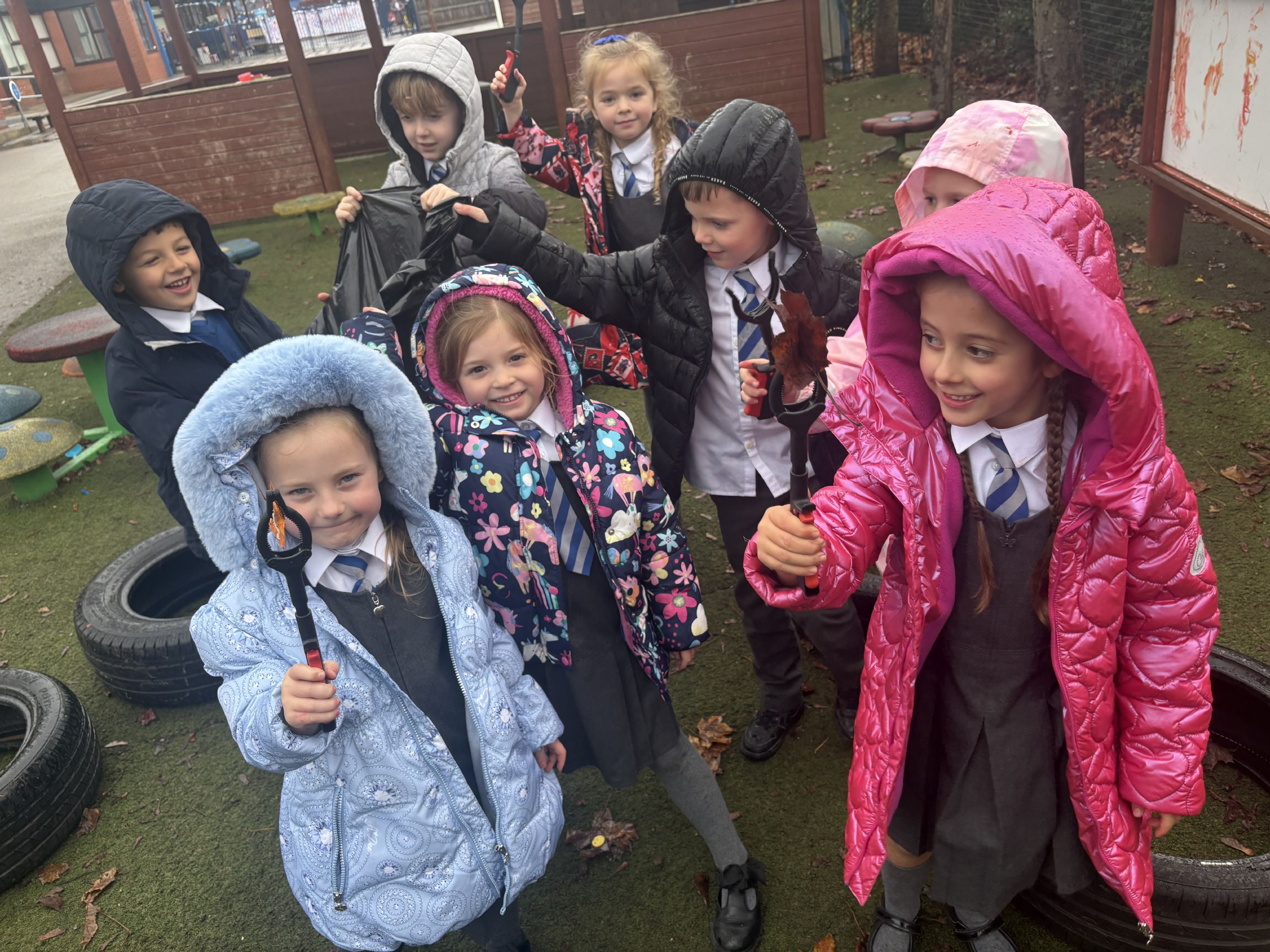
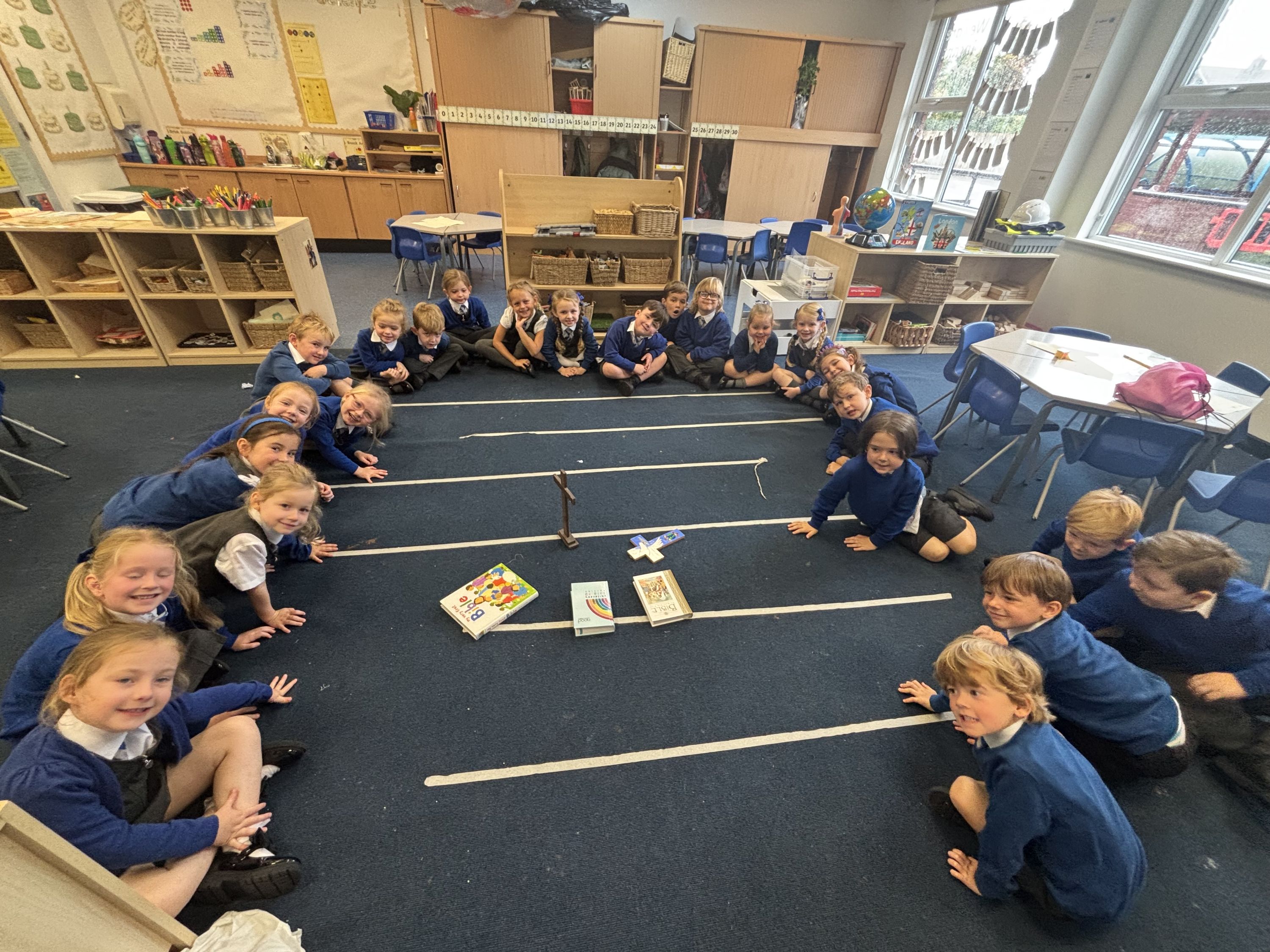
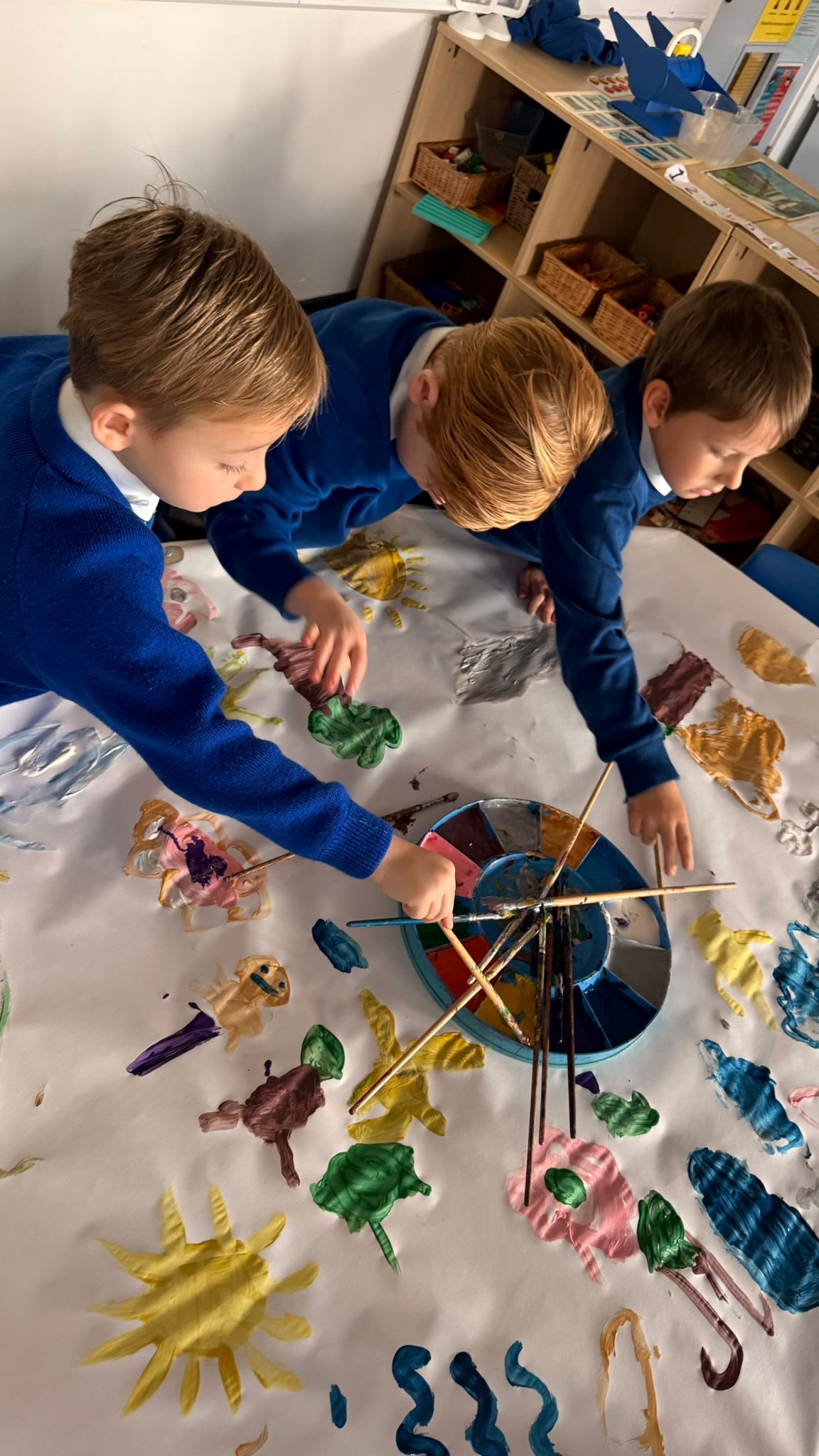
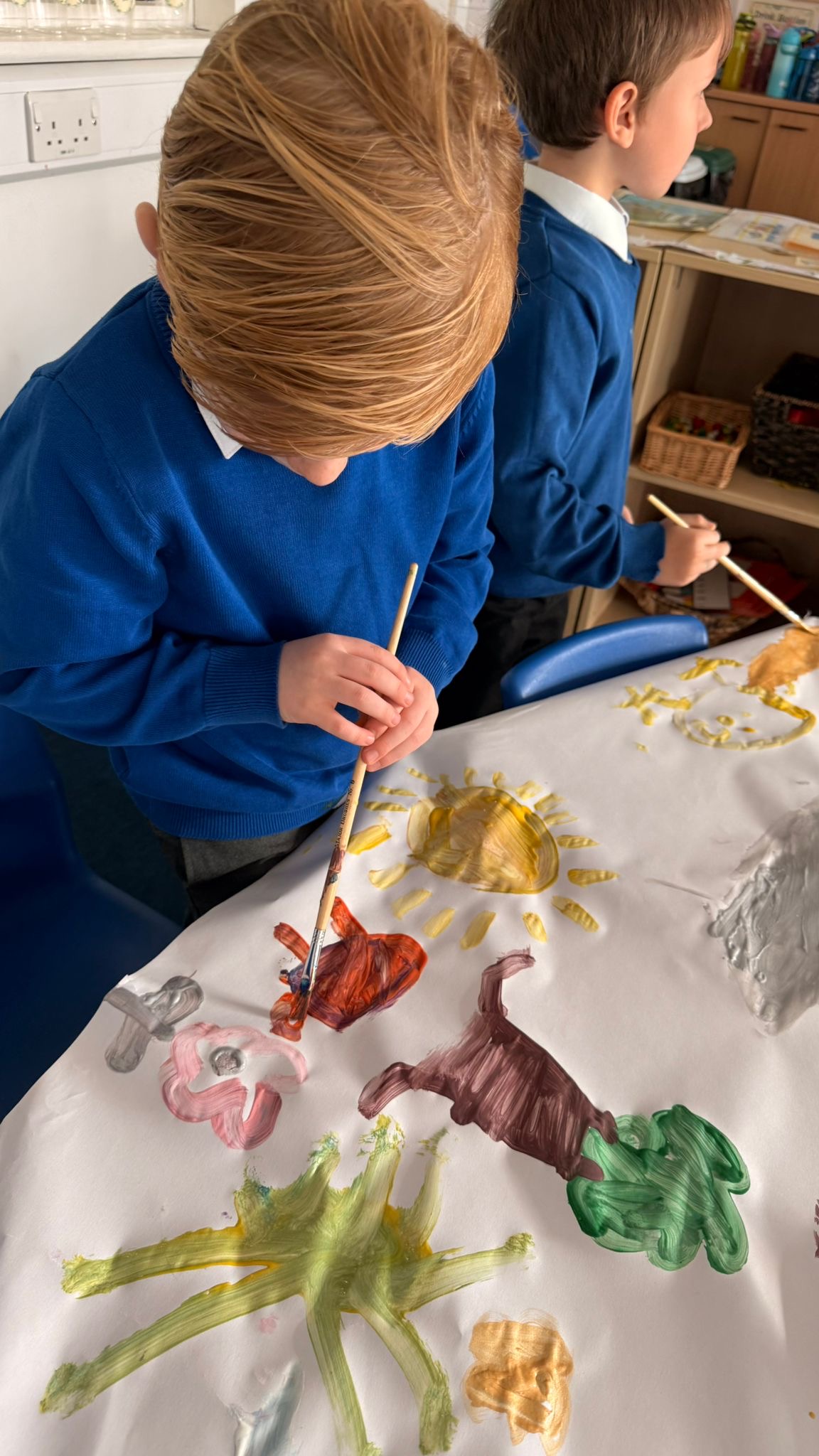
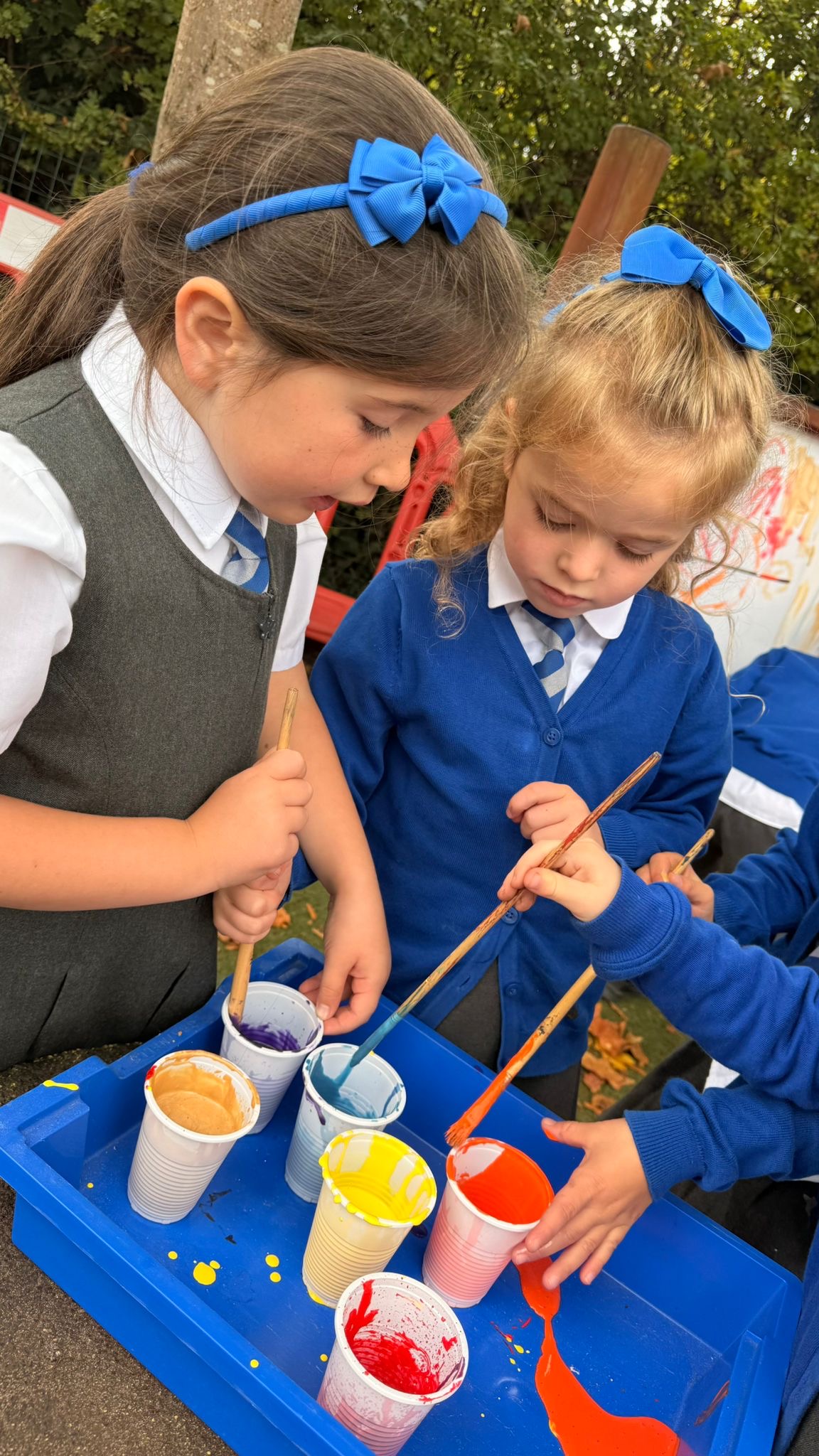
The children explored the Creation story through art, painting their own ideas of how the world was made. We compared the Christian Creation story with Hindu beliefs, learning about Brahma and how Hindus believe the world was created. After listening to Laudato Si’ (paragraph 13), the children learned that God wants us to care for His creation and listen to the “cry of the Earth.”
We put this learning into action by taking part in a litter pick around the school grounds. The children worked together to look after God’s world, showing care, responsibility, and respect for our environment.
🌈 RE in Year 1 – Branch 2: Know You More Clearly
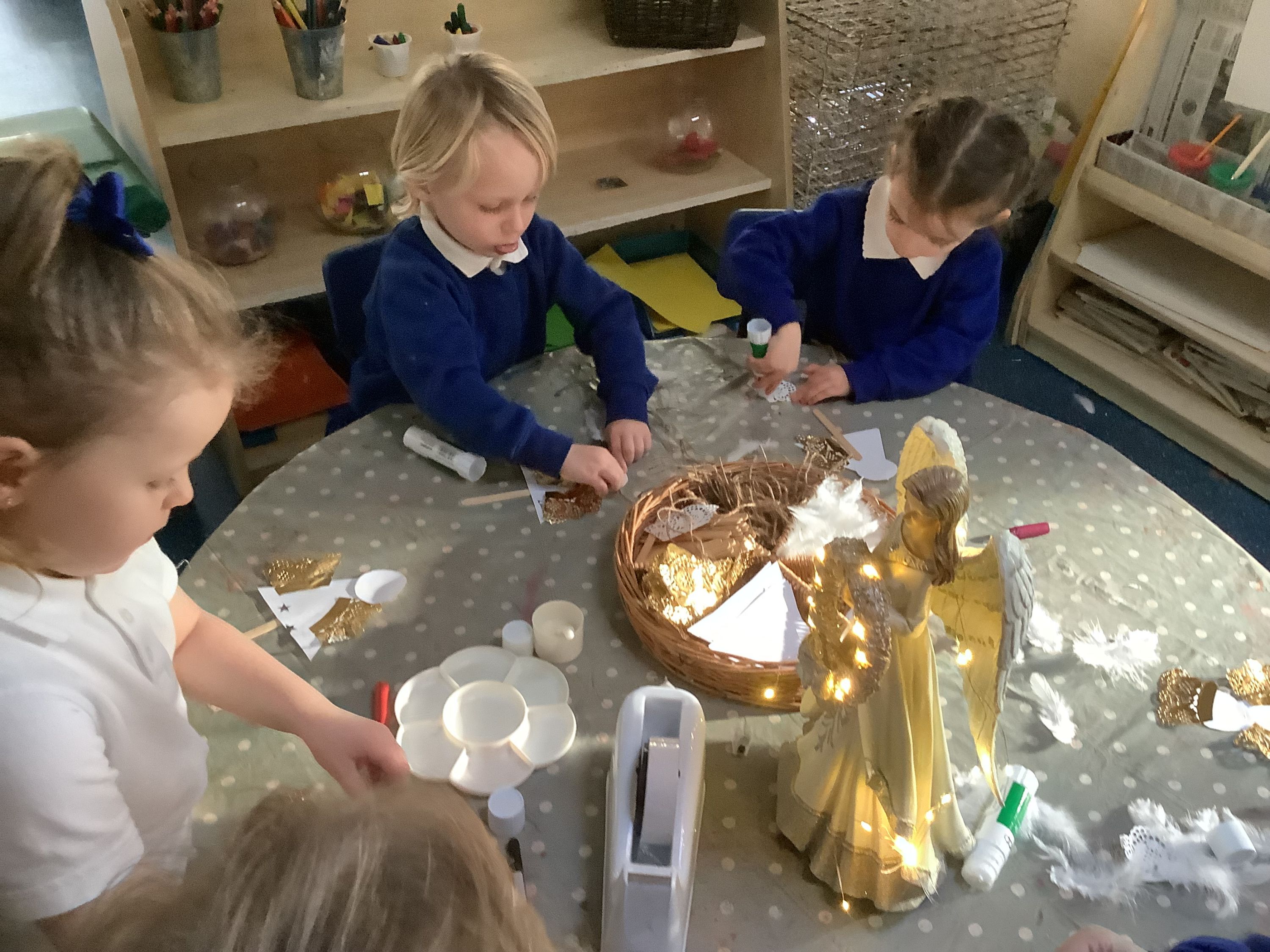
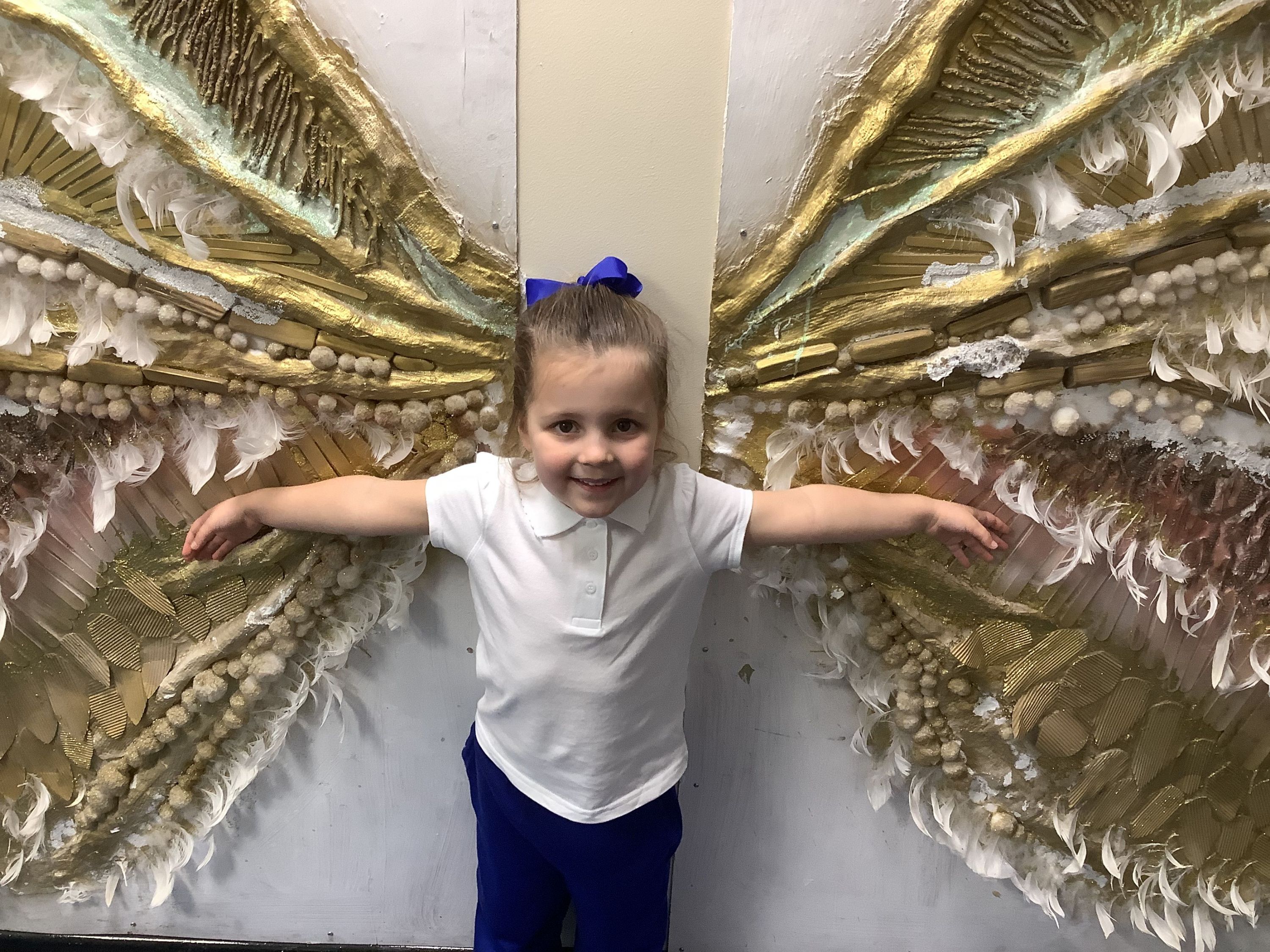
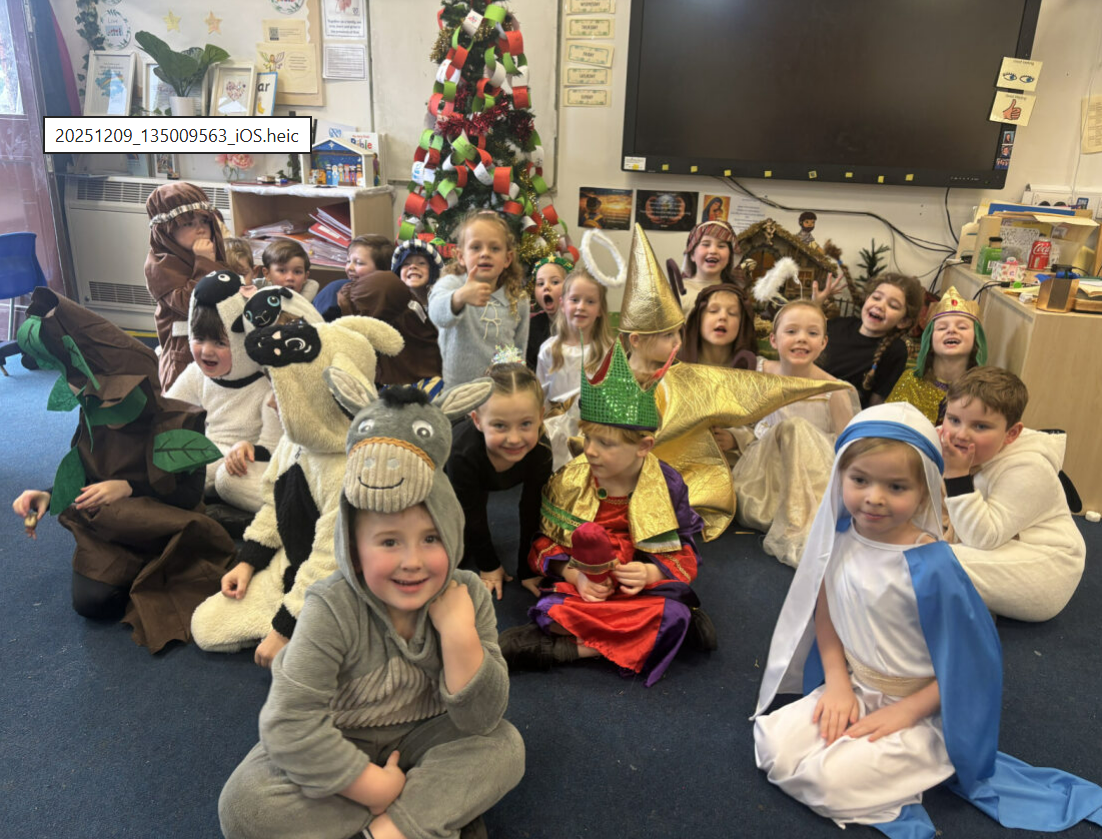
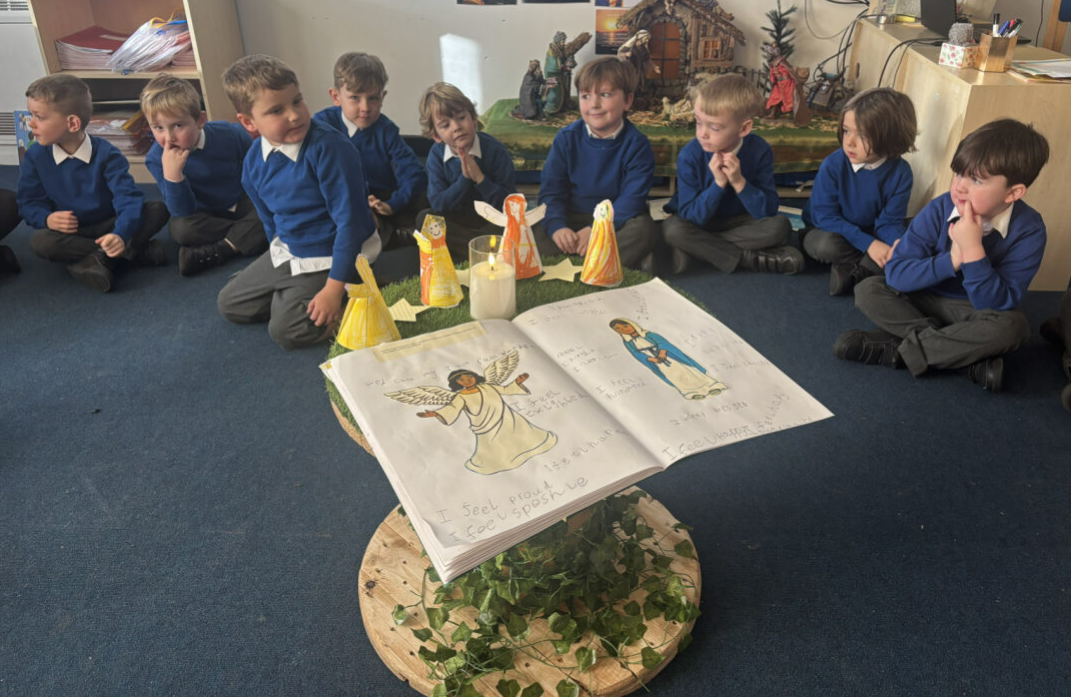
The children learned about the Annunciation, discovering how Mary was chosen by God. We set up creative provision where children made angels, created puppets, dressed up, and role-played the story. Through play and discussion, the children explored feelings such as surprise, trust, and kindness. We finished this learning by performing a Nativity for the school and parents. The children showed great confidence, teamwork, and understanding as they shared the Christmas story with others.
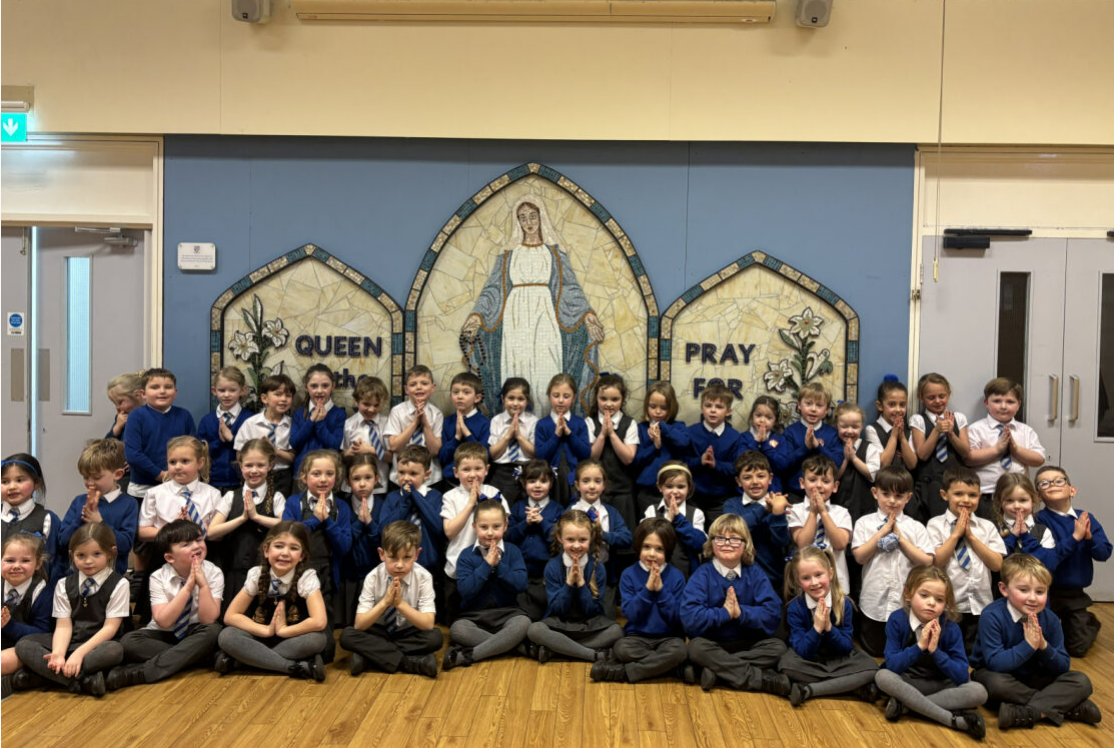
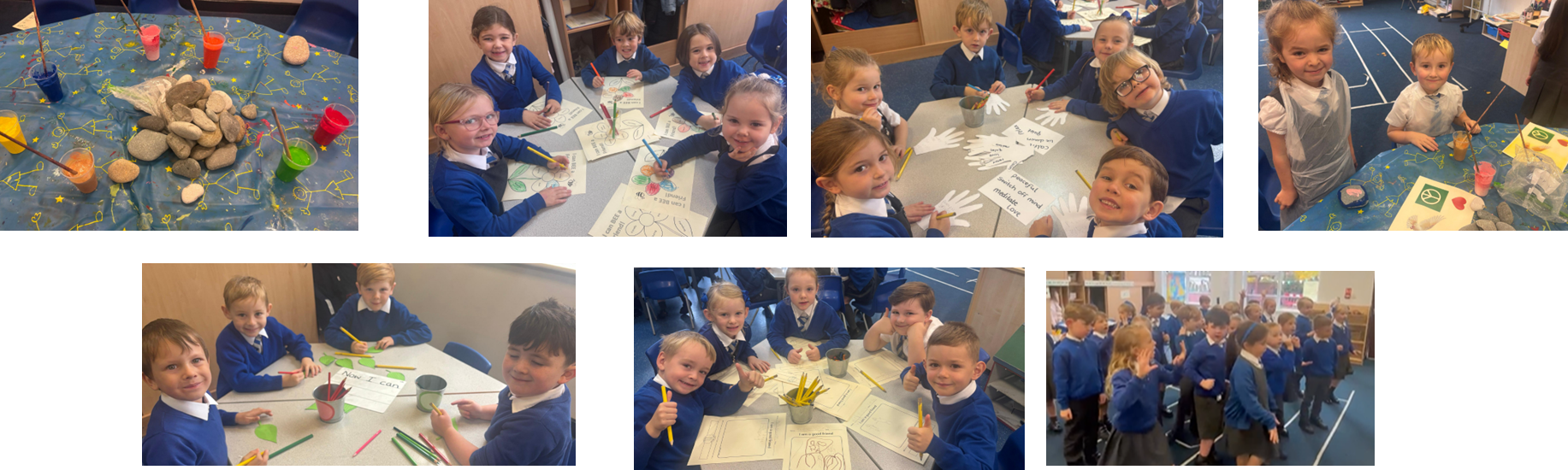
Mission Day 🌟
We celebrated Mission Day together. We reflected on our school mission statement:
“Together as a family we love, learn and grow in the presence of God.”
• We talked about what our mission means and how we can live it each day.
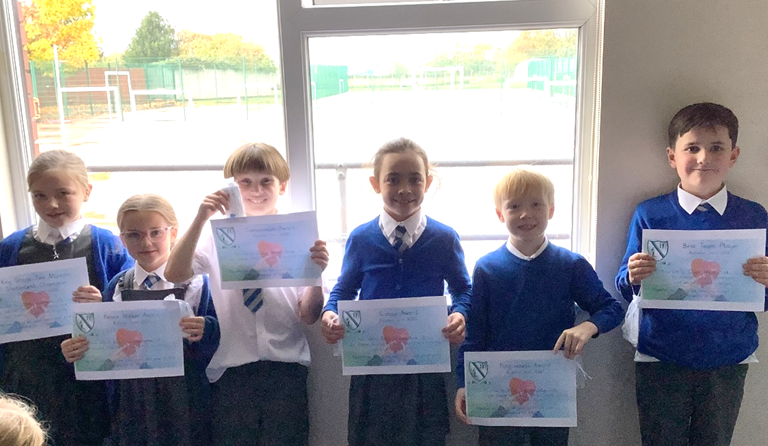
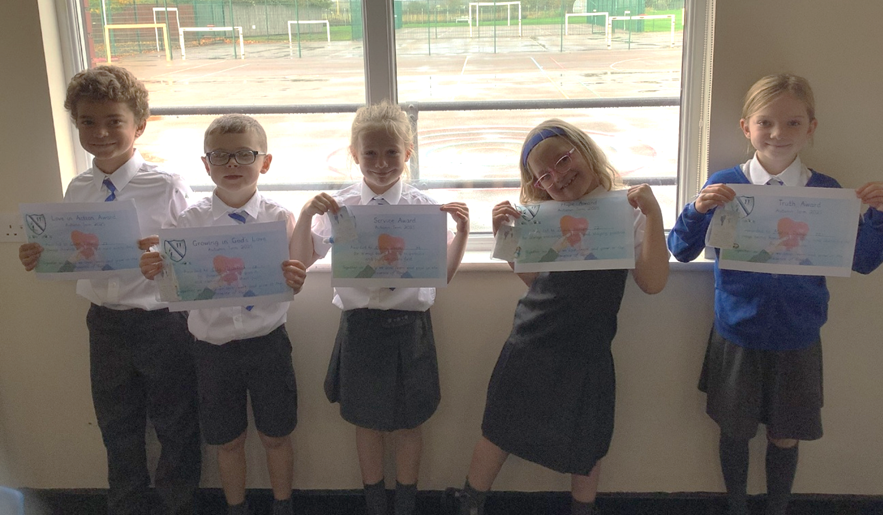
• The children took part in a lovely awards assembly with Father Phillip.
• We thought about how we have all grown and created a beautiful Growth Tree to show this.
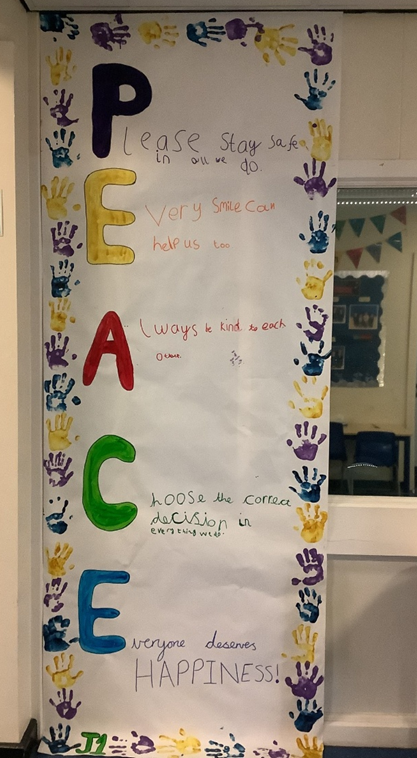
• We also shared ideas about how we can show love and peace in our school family.
The children really enjoyed the day and took great pride in celebrating our mission together. 🌿💛
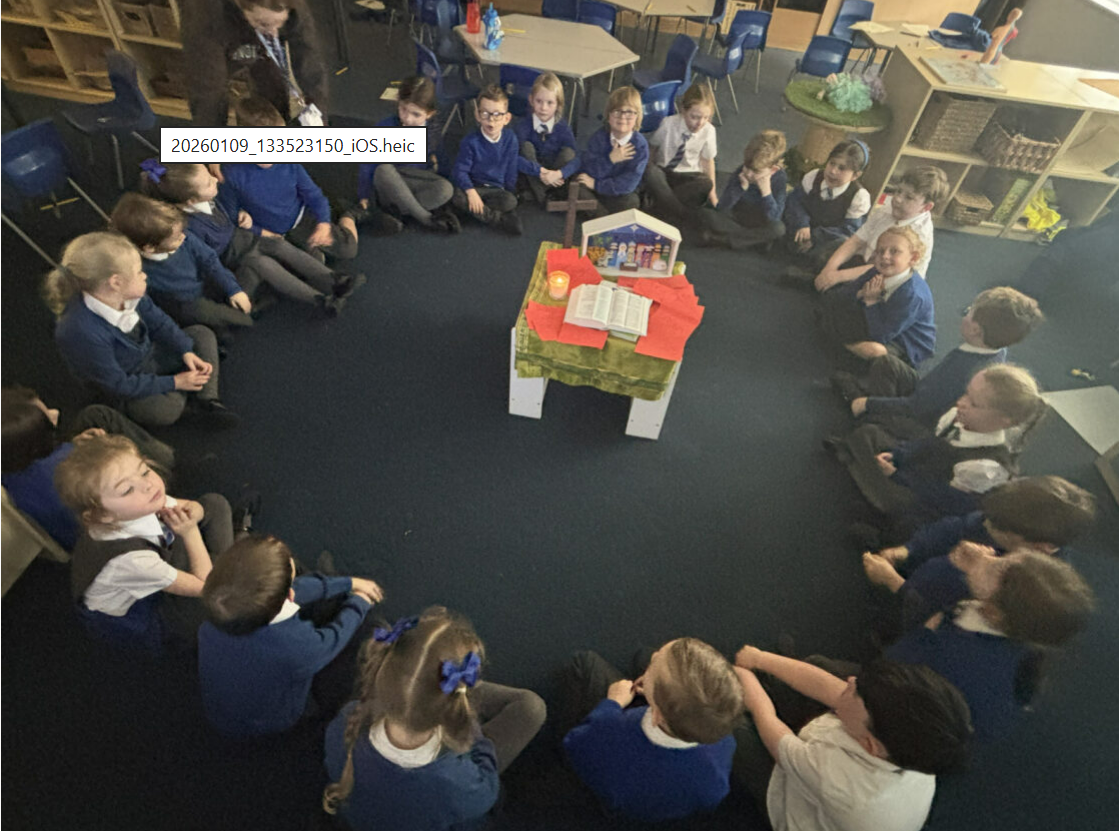
 Collective Worship - Gathering as God’s Family
We came together as God’s family to thank Him for our friends, our class, and our parish community. We lit a candle, listened to gentle music, and prayed together, remembering that Jesus is always with us. We heard St. Paul’s words reminding us that, just like the body has many parts, we are all special members of one family — the Body of Christ. We placed drawings of ourselves around the cross to show that we belong to God’s family and said thank you for all the people who help and love us each day. As we go forth, we promised to share God’s love through our smiles, our kindness, and our helping hands.
Corinthians 12:12-14
“The body is made up of many parts, but it is still one body. We are all parts of Christ’s body.”
Collective Worship - Remembrance Day
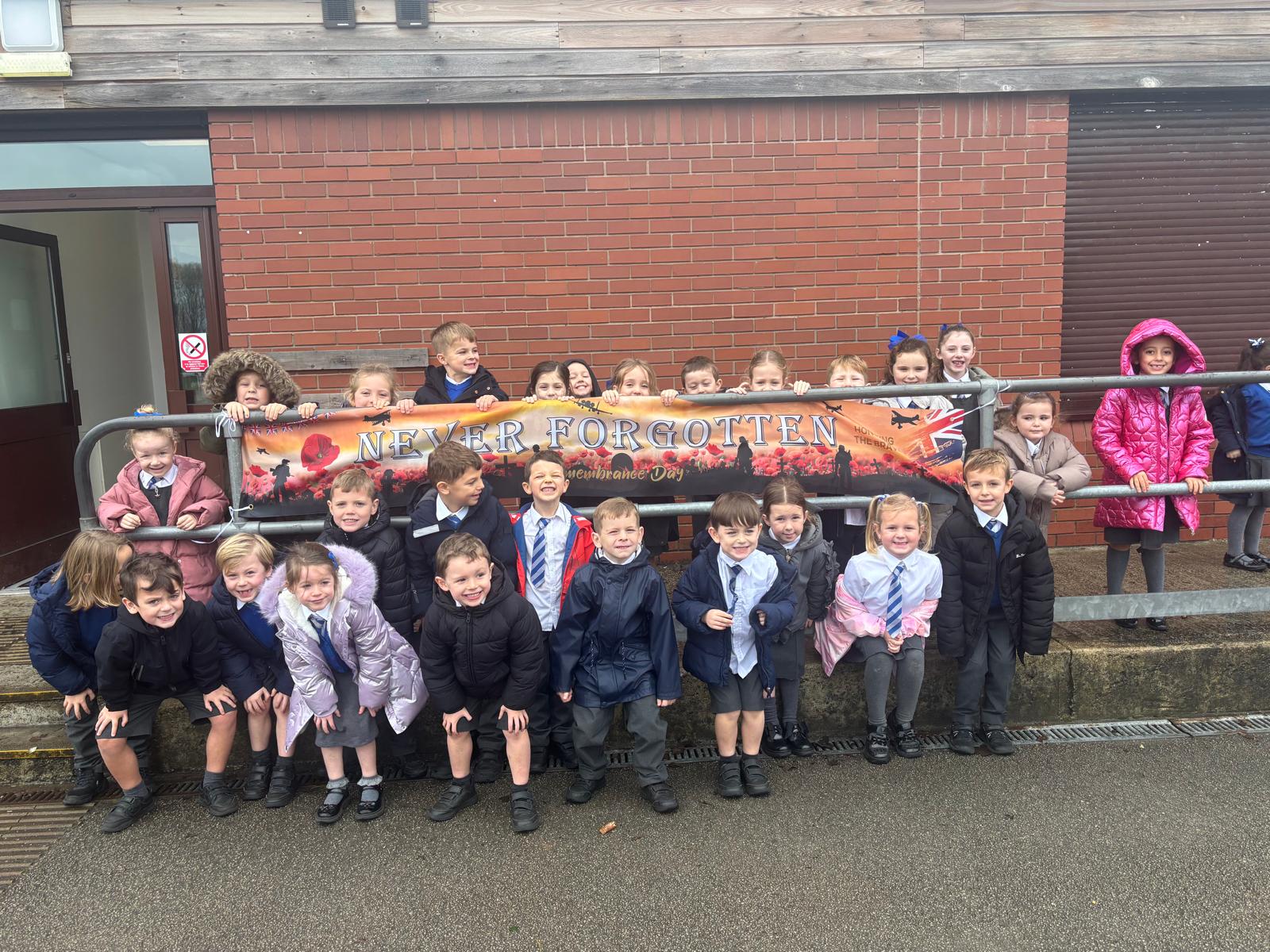
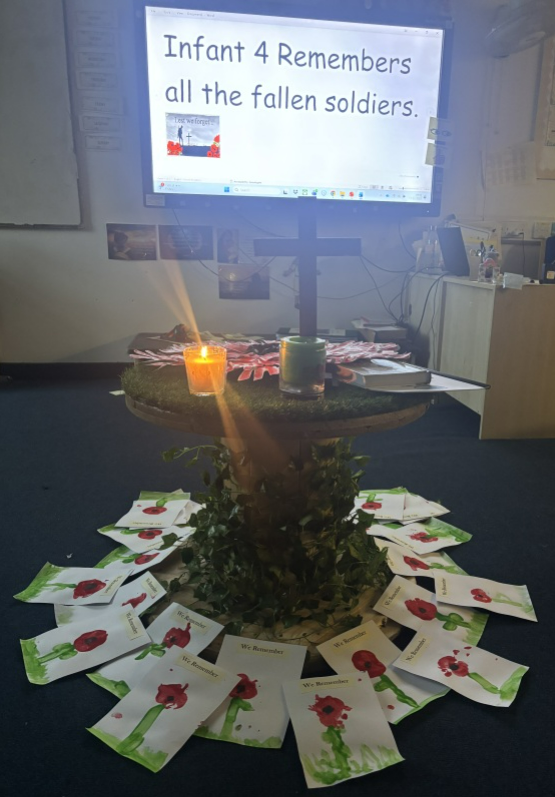
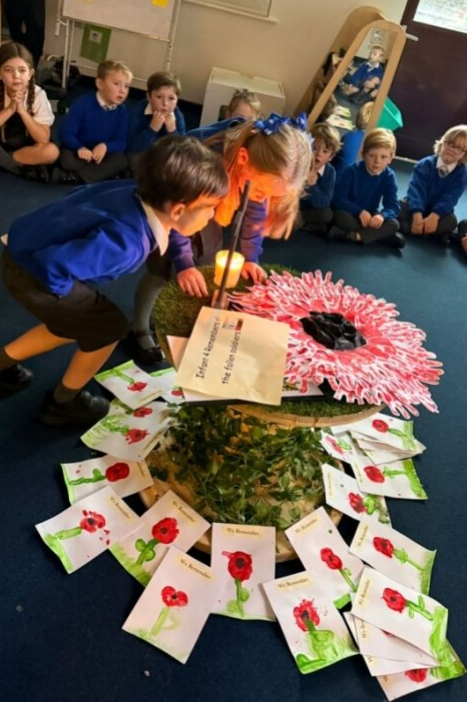
In Year 1, we shared our thoughts for Remembrance Day. We talked about what the day means and chose words to help us remember. We thought about how grateful we are for everything the soldiers did for us. We used a piece of scripture and said a class prayer. We also made poppies and placed them on our prayer table to show our respect and thanks.
Year 2
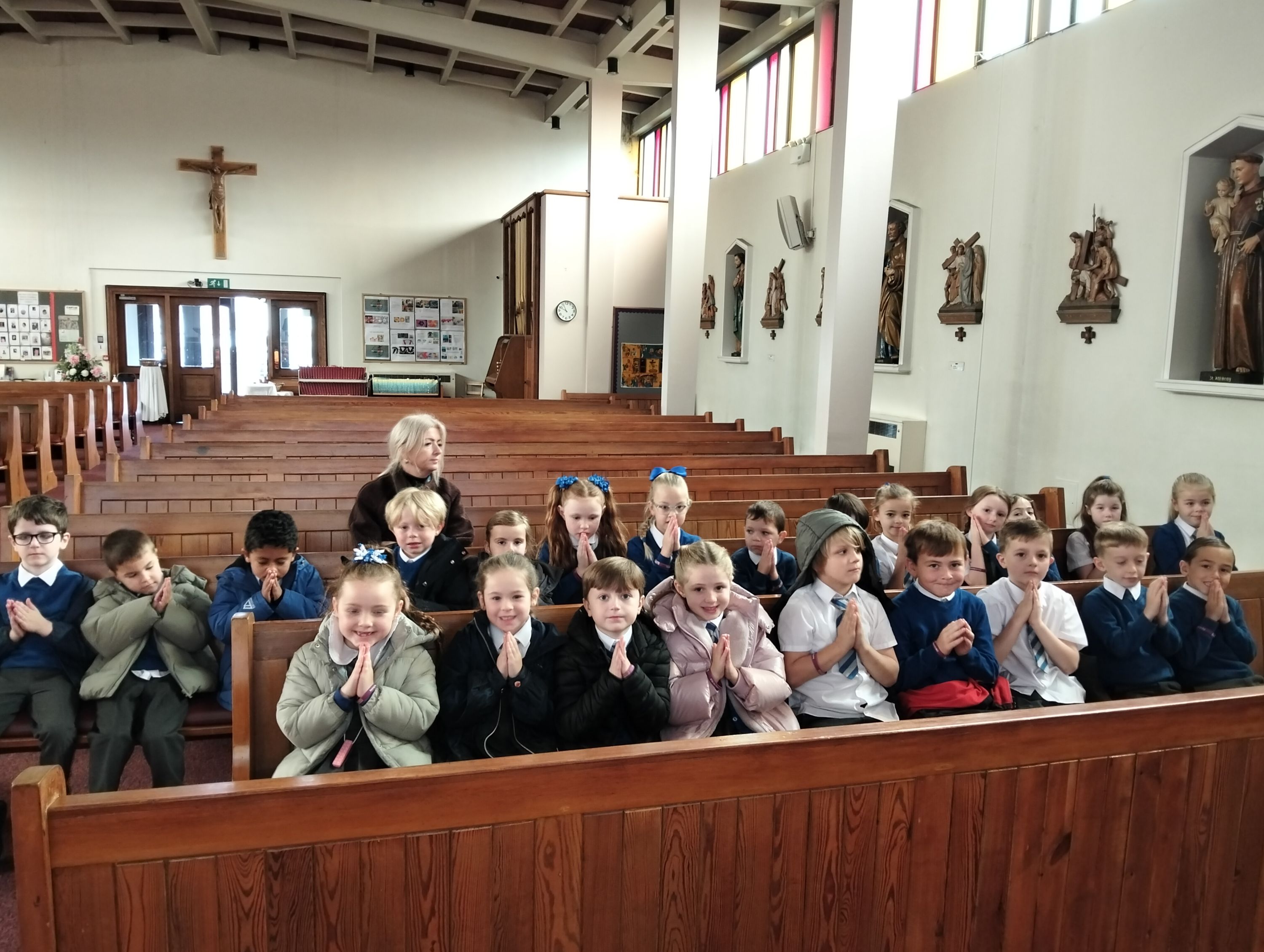
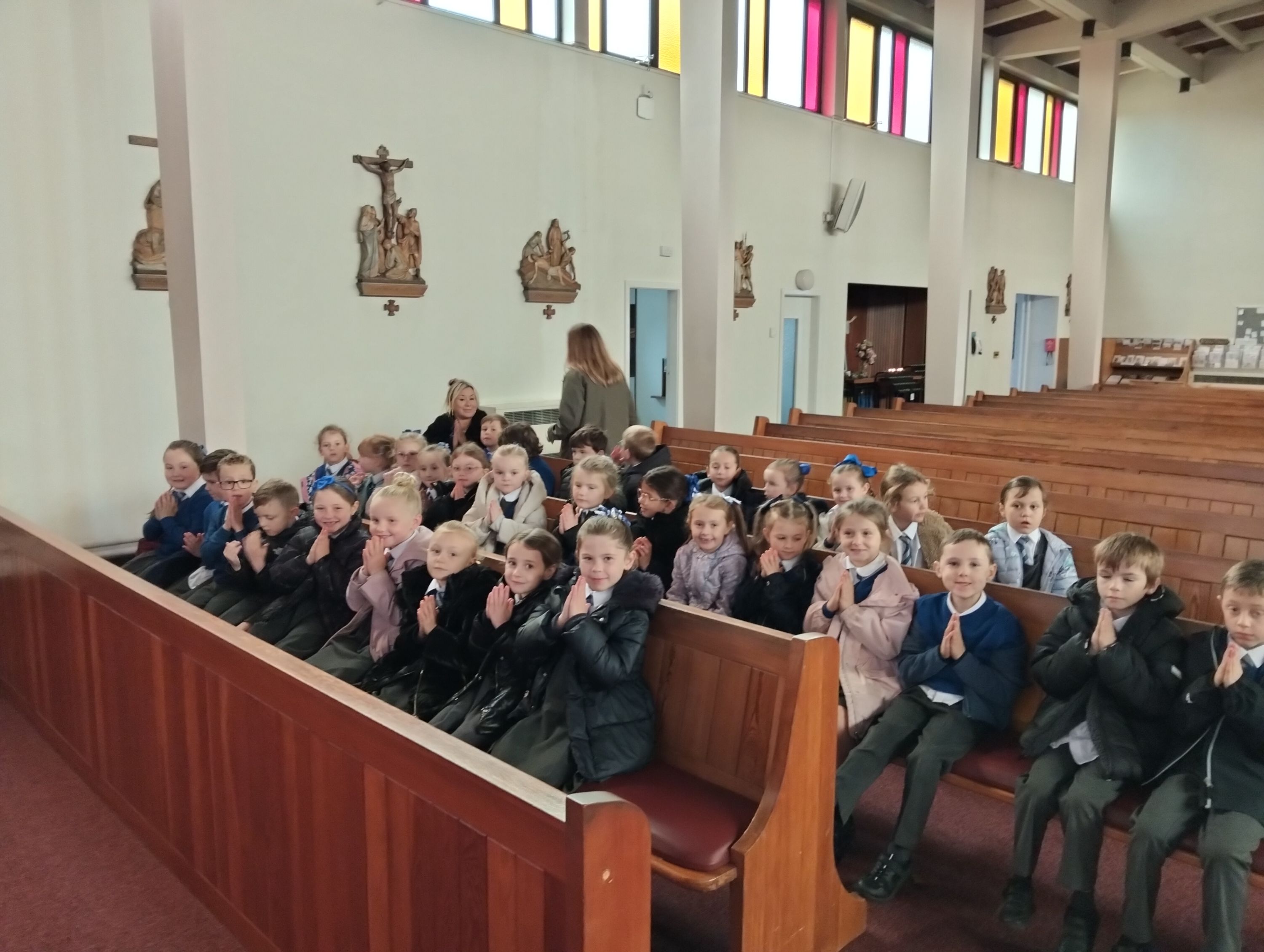
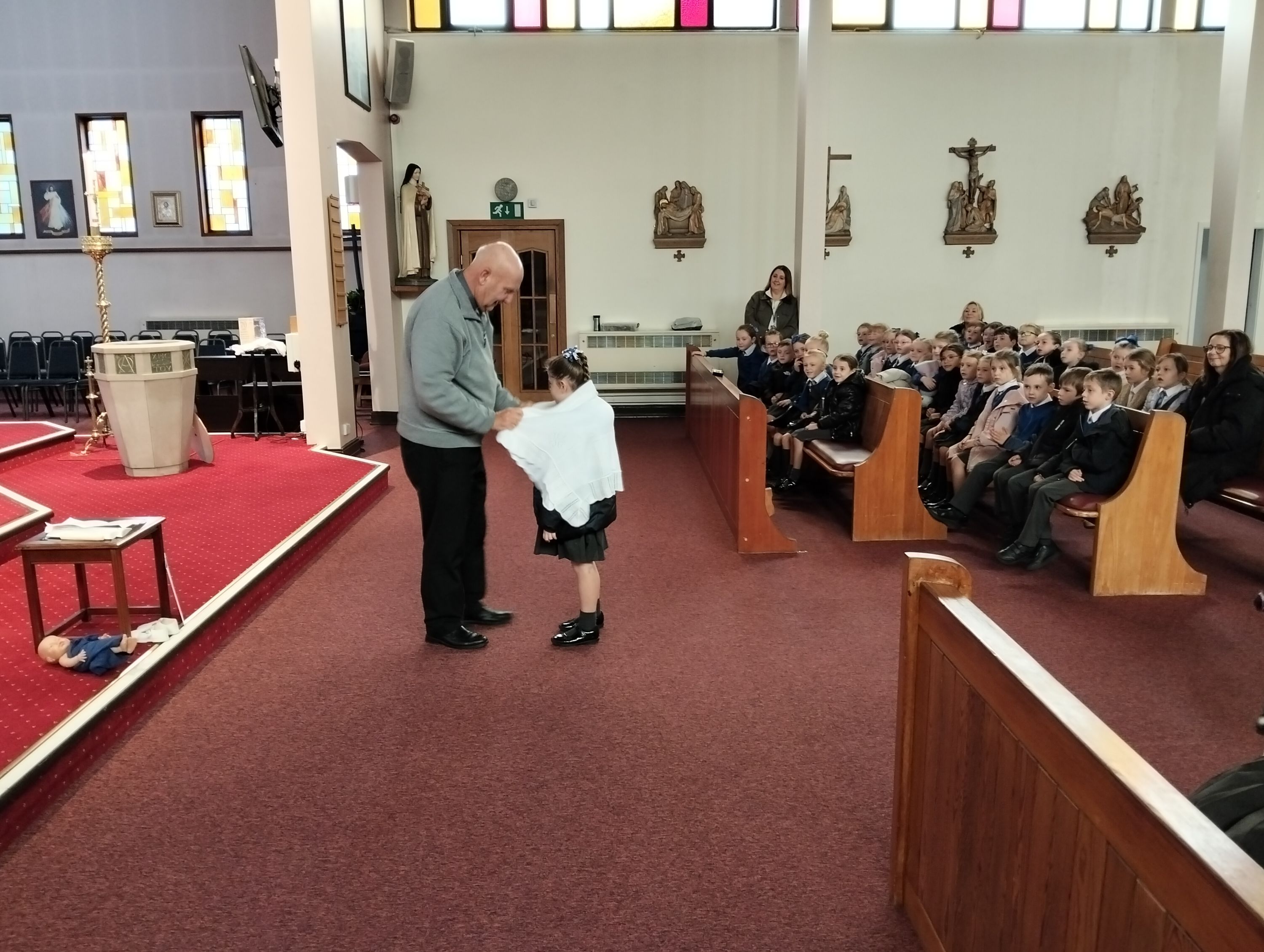
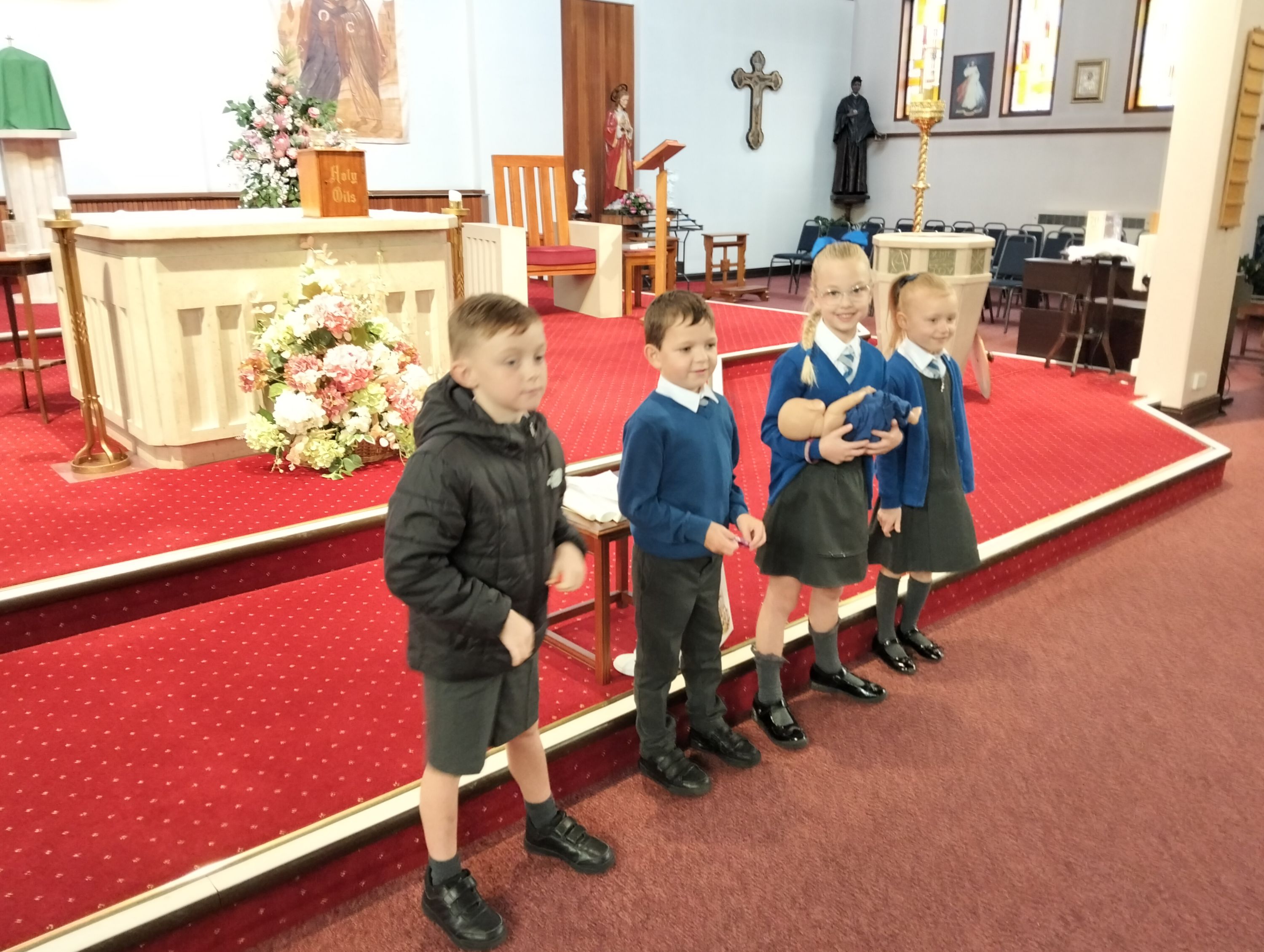
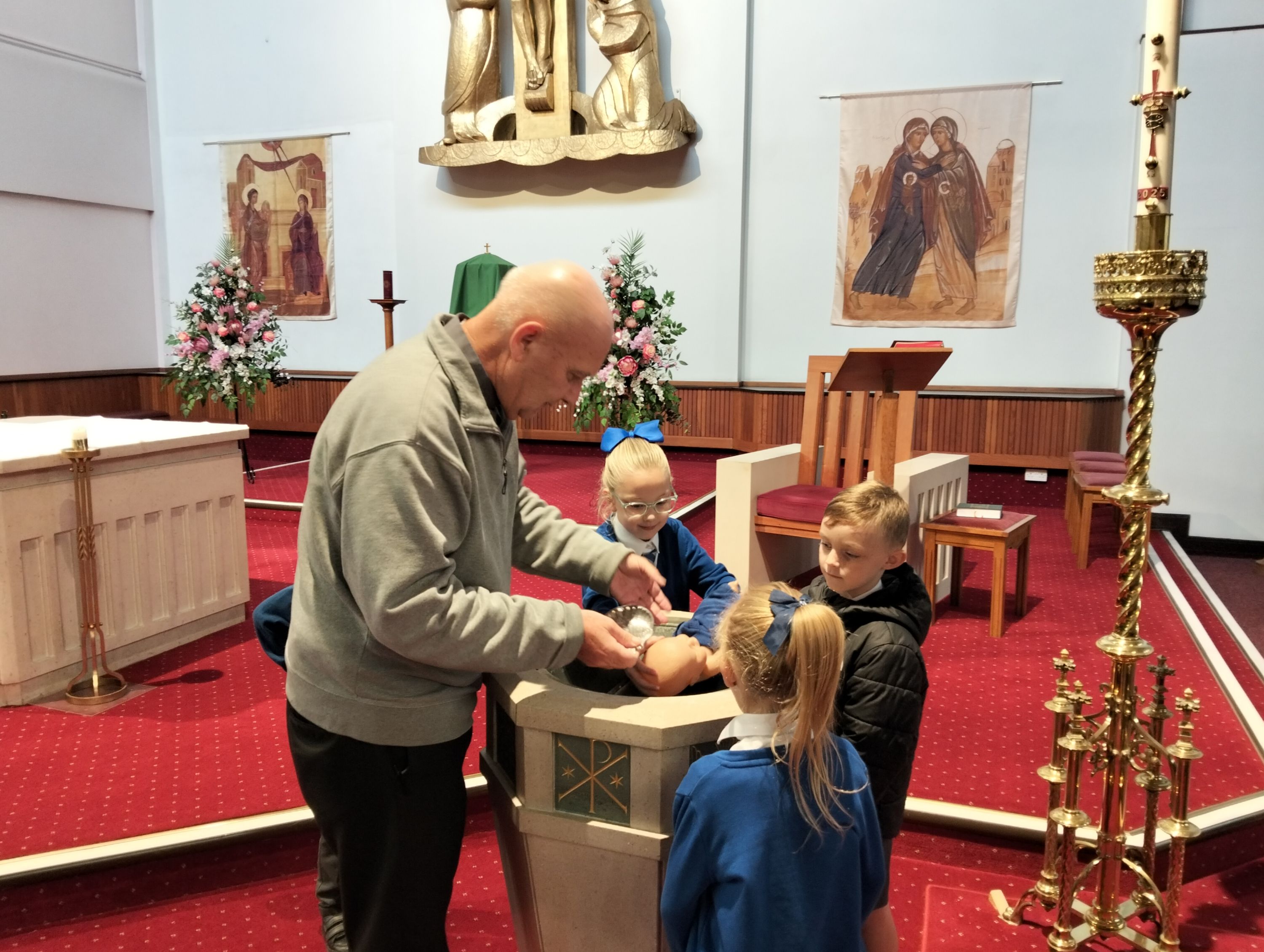
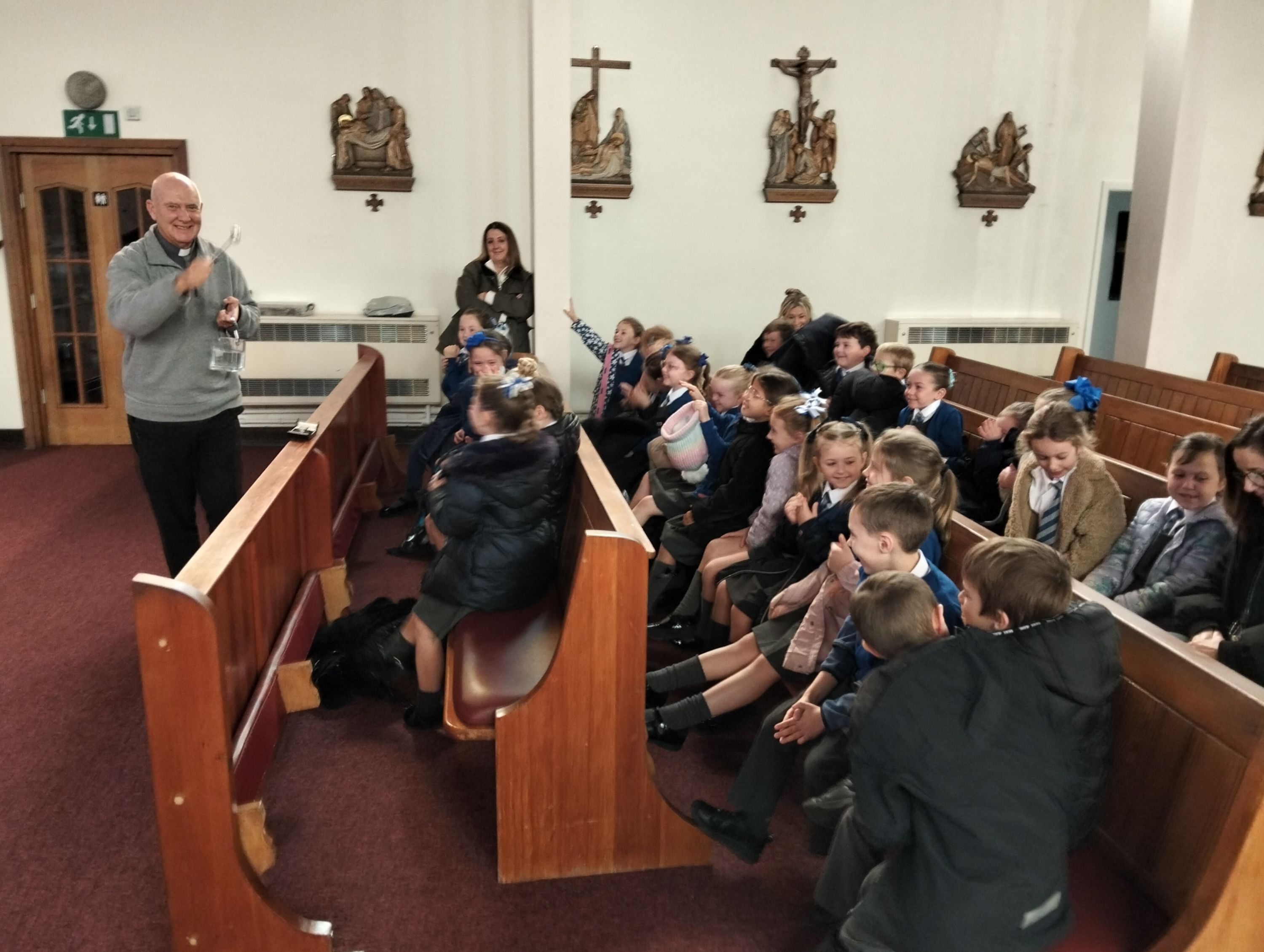
Visit to Church to learn about Baptism.
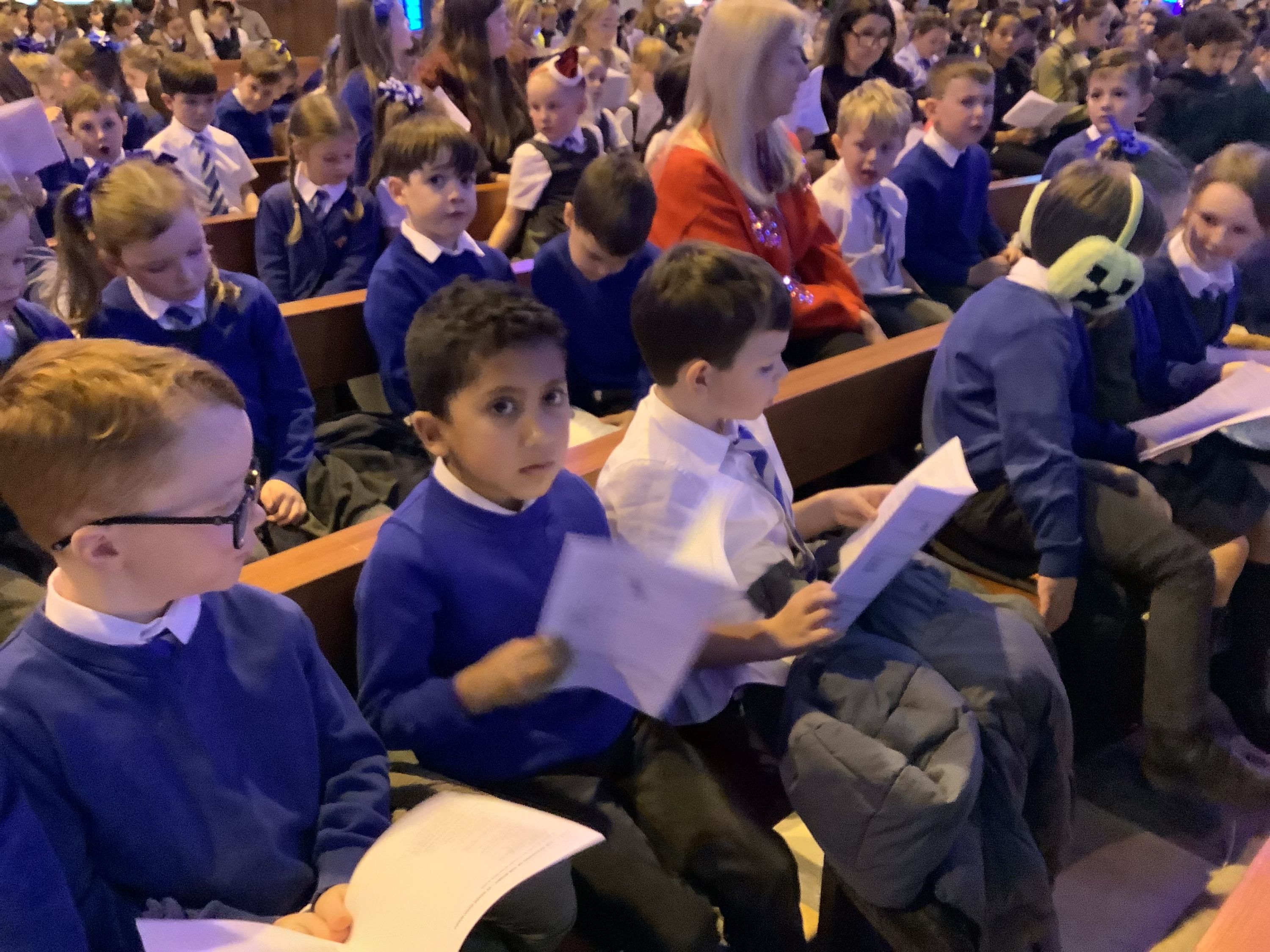
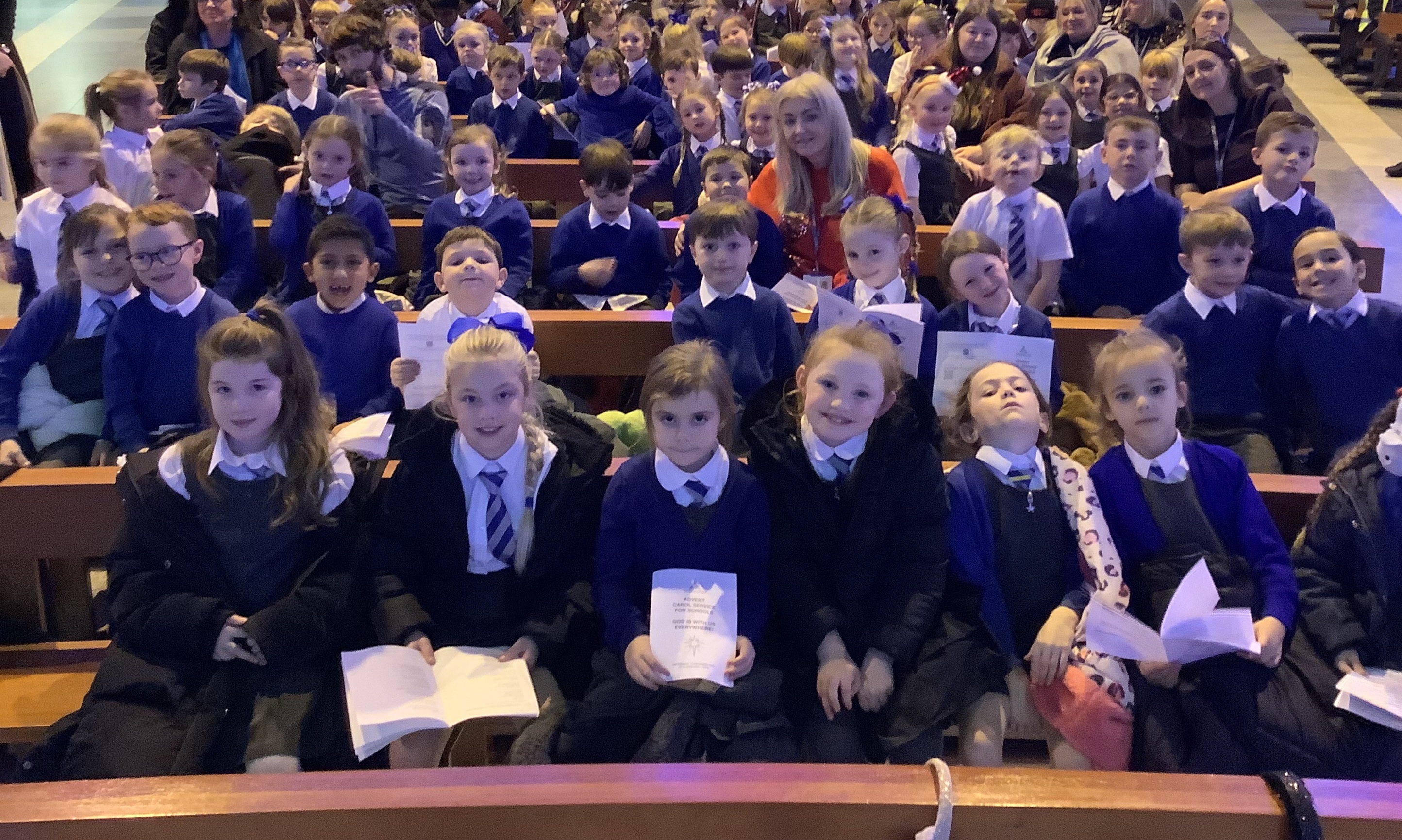
Visit to the Liverpool Metropolitan Cathedral
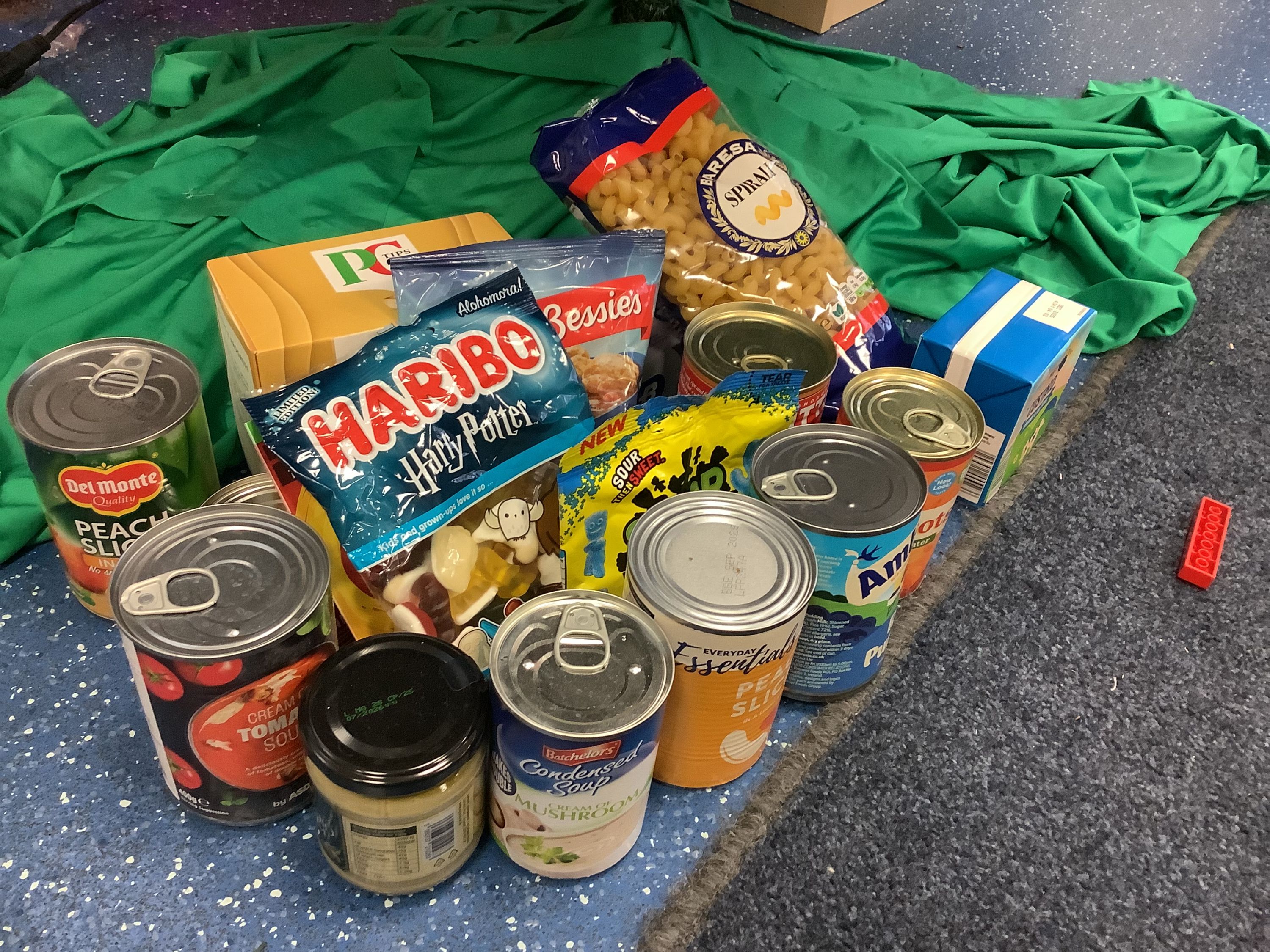
Reverse Advent Calendar
As part of our celebration of advent, we collected food to donate to local food banks.
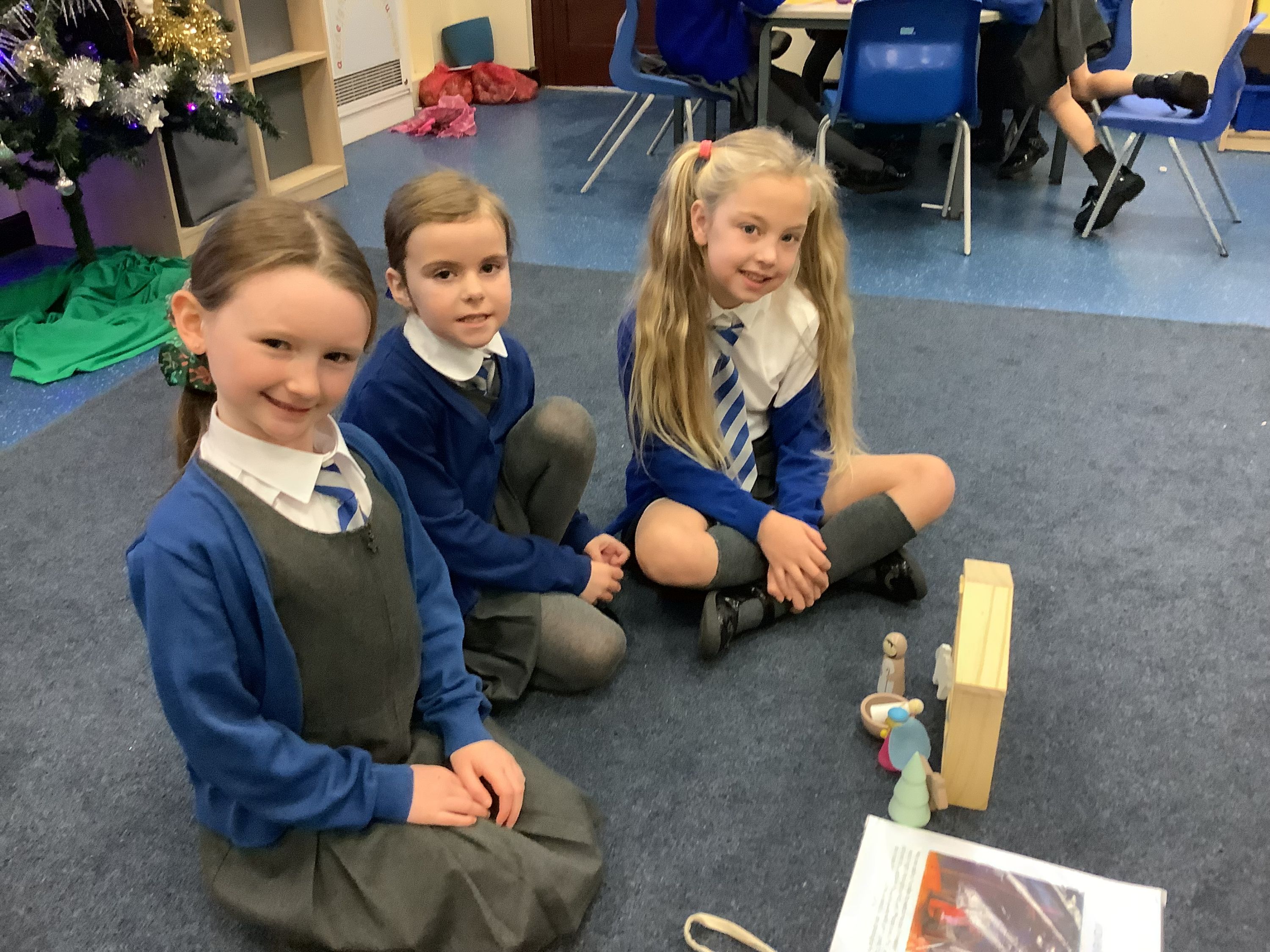
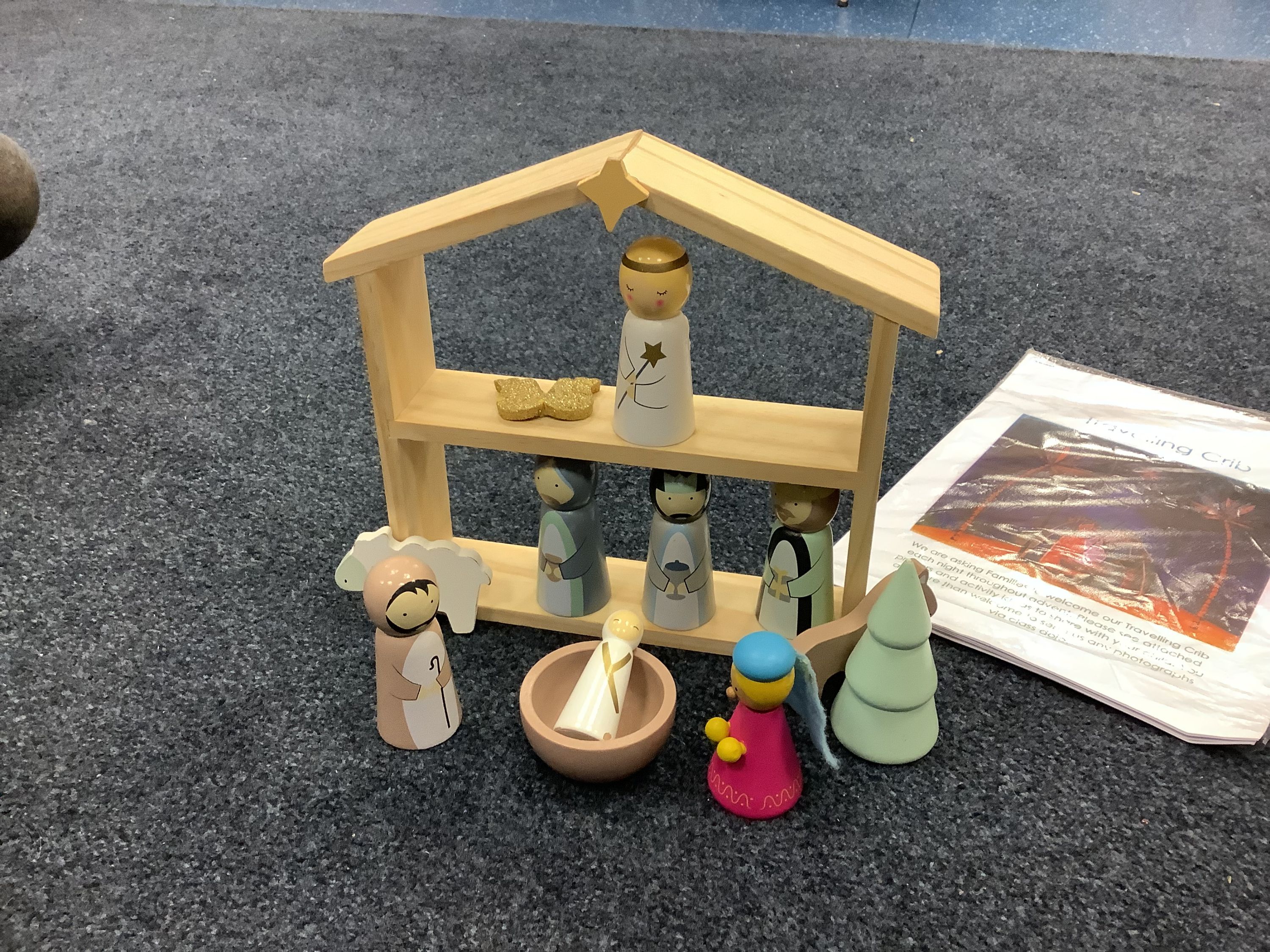
Travelling Crib
Year 3
Mission Day 🌟
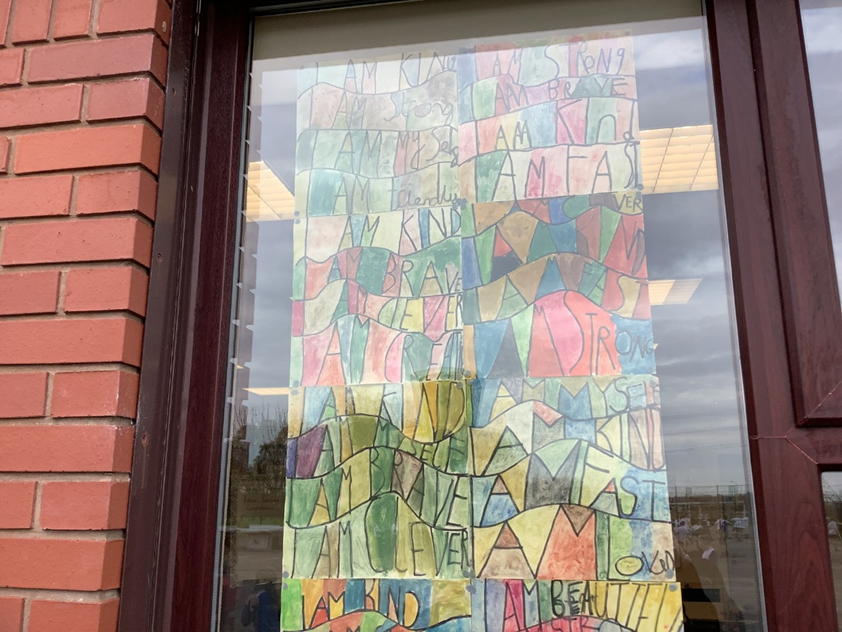
We really enjoyed getting to celebrate Mission Day and created some wonderful art work to celebrate the Mission Statement of our school. We also celebrated those children who demonstrate different values that embody being a member of Holy Rosary Primary School.